Framboat history – Now in english – Colin Archer double ender boats and One Off racing boats
Framboat
History document years 1979 – 1984, revised version 3
October 2012
Jukka Pohjola

Tattarisuo, our first yard in the dark suburbs of Helsinki
Framboat started its existence in the year 1979 in an industrial suburb in Helsinki, Tattarisuo. We made 4 Colin Archer type 33 bare hulls with Pekka Piironen, in one small sheet metal arch hall. The hall was originally meant for truck service. It was inexpensive, warm and suitable for us, we divided the space with plastic curtains.

C-A 33 hull molds were made as a hobby work by Chrisse Lydman. Chrisse & co. had earlier manufactured 3 pieces of C-A 33 hulls, two with these moulds. The first one was of course the plug boat for the moulds.
I had studied boatbuilding and design in Uppsala, Sweden, where I changed my economy studies to boat building and design. Ubbab limited company got a scholarship from a Swedish “Studieutveklings-fond”. Schooling for one person had to be included in that scholarship. I took that chance and changed my economy lessons at once to my old and dear hobby, boats.
Before we bought these Colin Archer boat moulds with Pekka Piironen, I made in advance drawings of this boat that lacked drawings in that time. The line plans and the frames of that boat had been optically reproduced from a bigger Colin Archer RS cutter plan. The beam of the boat was 18 cm narrower than it should be because of the optical error, and Chrisse Lydman was worried about the sailing performance of the hull because the relation between the length and the width had changed.
I sailed quite many Colin Archer´s and similar double ender boats in Sweden and I knew that a small straight section in the middle of the hull only had a positive effect on the sailing abilities.
Two rigging plans were drawn with my swedish colleagues, one gaff cutter and one Bermuda cutter for the Colin Archer 33. Later in the year 1980 I ordered two new rigging plans from Björn Atterberg in Sweden. He had made rigging plans for Colin Archer and similar boats with long keel.
Bermudan cutter version got a new longer mast and a huge boom. We had to draw an aft bowsprit to get the aft stay fixed to the hull.
In Tattarisuo in the steel hall we were also helping to make three Svea cruiser 36′ bare hull & deck delivered to the members of Helsinki blue-collar sailing association.

We repaired at last the hull forms and we cut away the overlapping of the hull and deck joint. Now we established the right longitudinal curve for Colin Archer.
After the third hull we also made changes to the forms to get an utility hole for the propeller. The moulds were also repaired and polished in order to get better boats out of it. We found the molding forms very stiff and sturdy, although their weak looks. Chrisse had used new Firet distance foam in them. Firet foam / by Telko was eminently effective.
Haapaniemenkatu, our new place for the yard
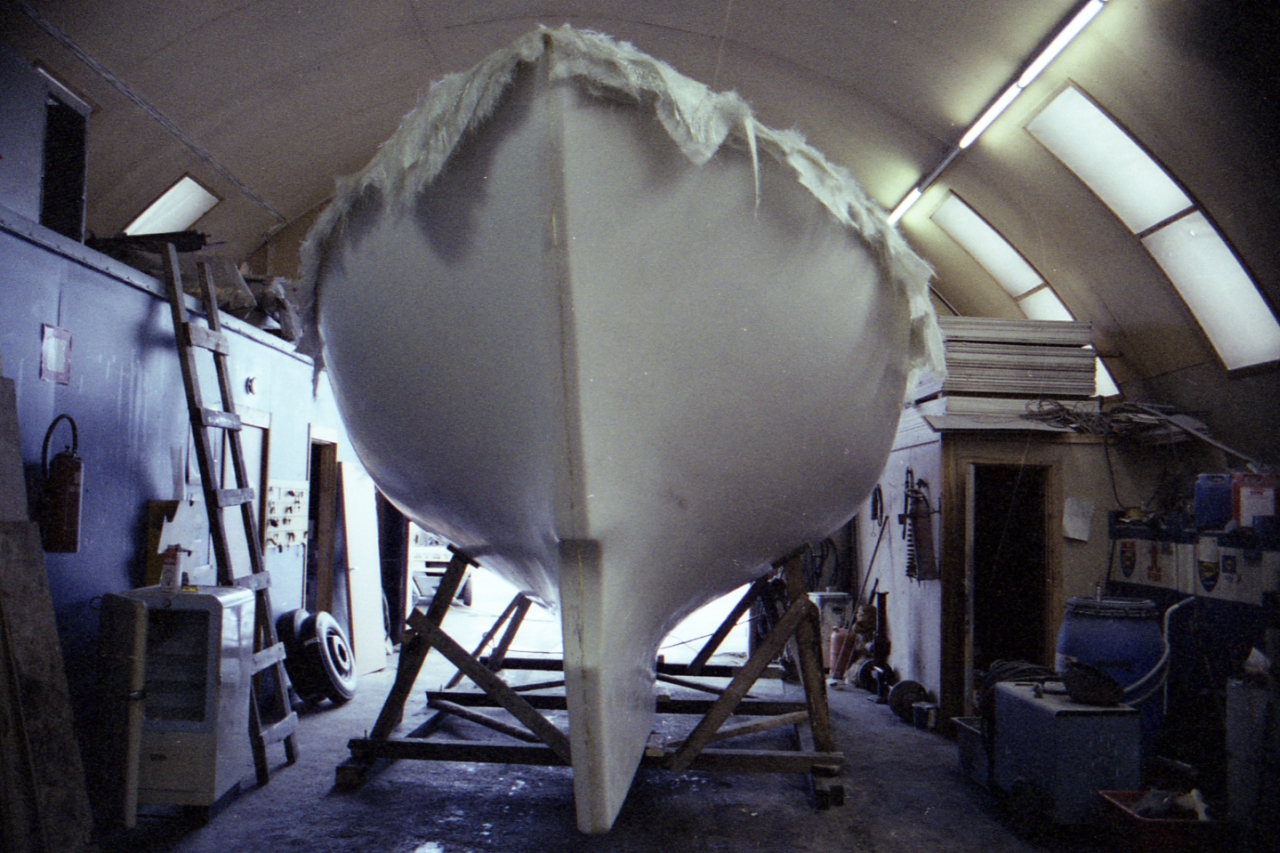
Last job in Tattarisuo was to cut the propeller tunnel and make it to the hull moulds. After that modification we moved from the arc hall in Tattarisuo to an old locomotive factory in Hämeenkatu in 1980 It was situated in the corner of Hämeenkatu and Haapaniemenkatu, almost in the city center in a pictoresc old industrial building. We made 2 more Colin Archer hulls there on the second floor locals.
In Haapaniemenkatu we started to make the plug for the deck forms.
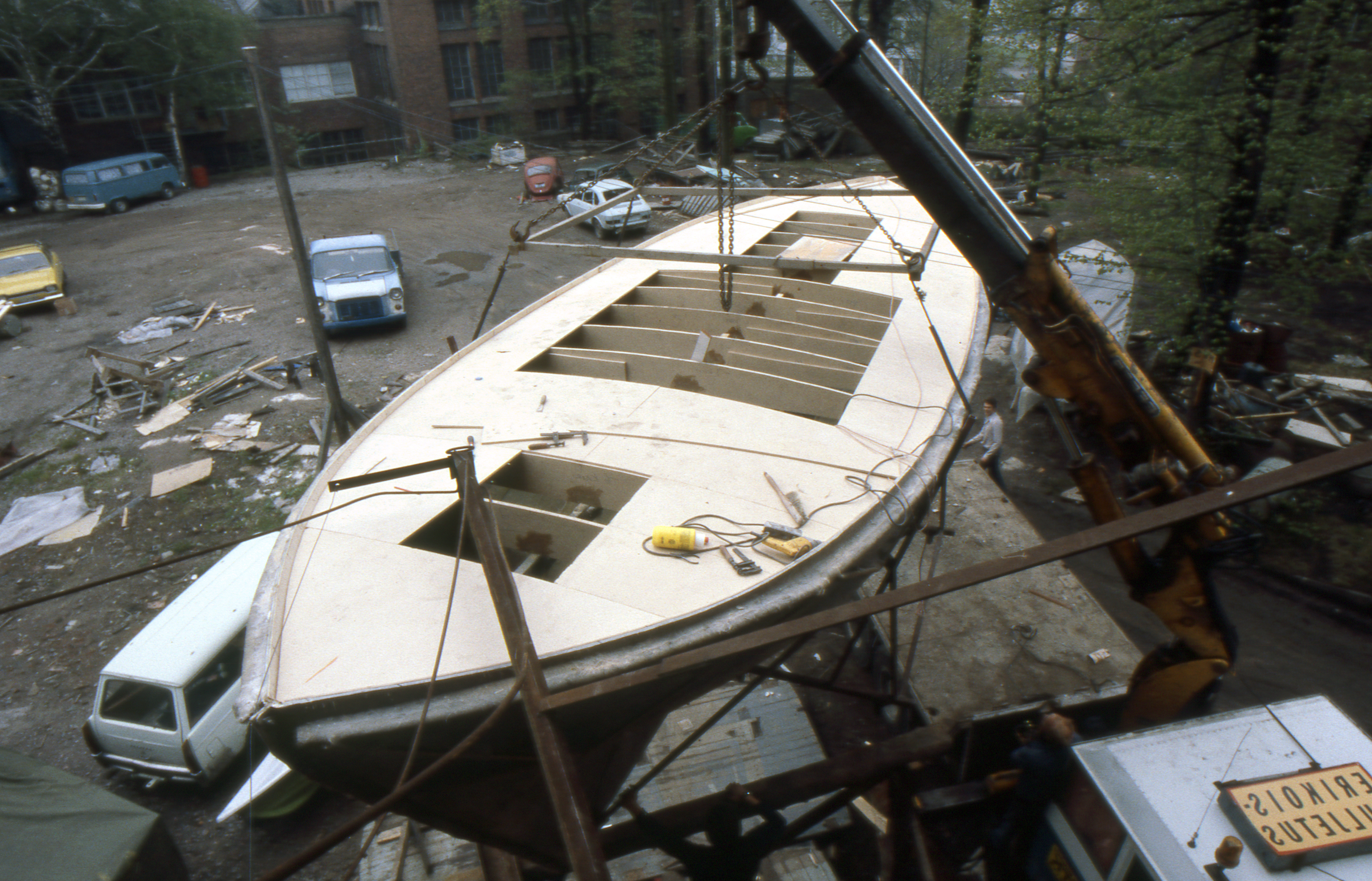
We built the plug first on the second floor where the rooms were quite low. We realized soon that we must see it from a distance.
We rented localities with a good height on the old locomotive assembly hall so we could admire our CA 33 deck plug as a whole. We moved the hull forms, and one CA 33 boat inside as one unit to the new place with good height. Here we finished the deck plug. We also made the new deck mould there, although we finished the mould in our new localities in Porvoo, where we had to move very soon.
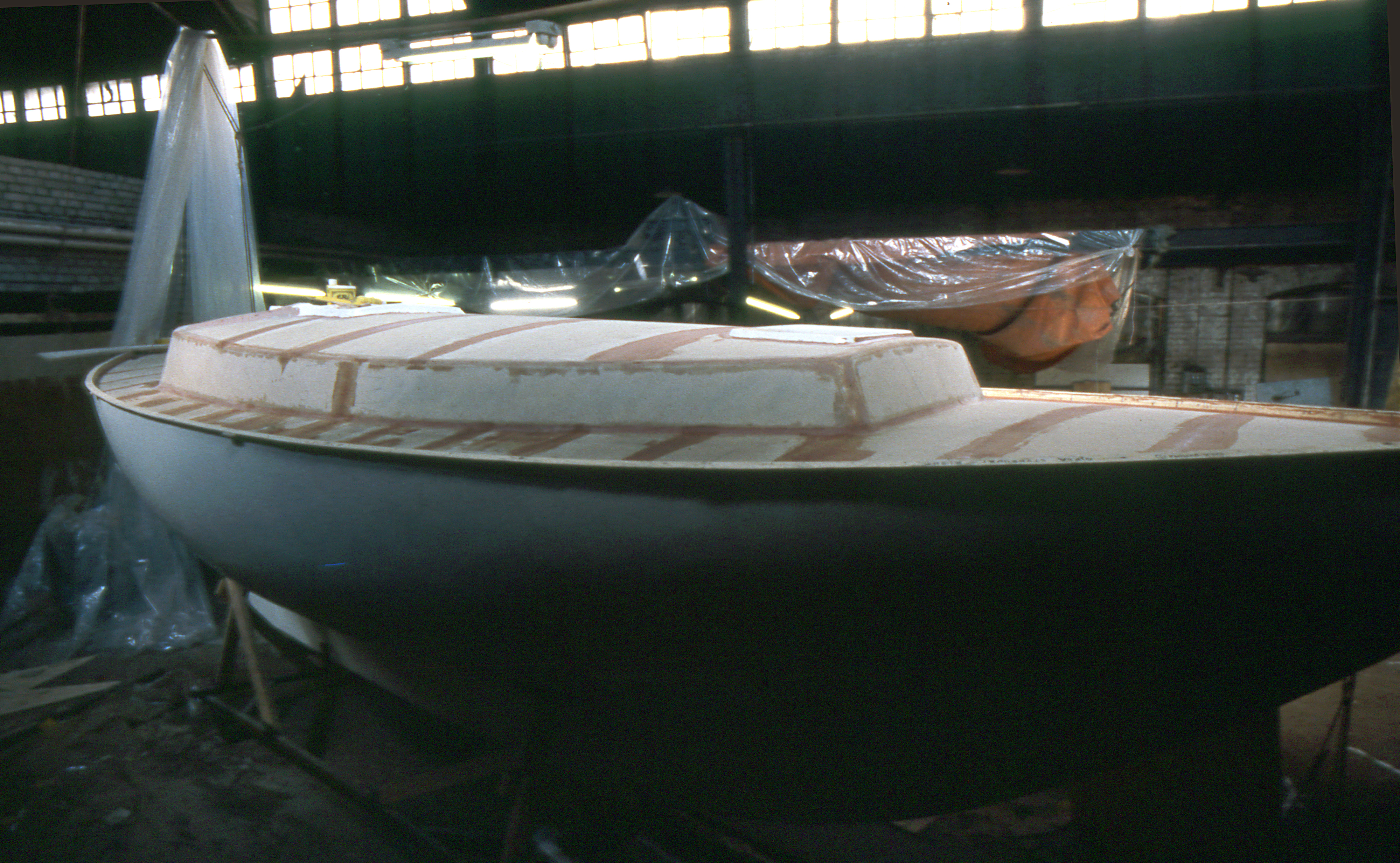

One of the CA 33 hulls was exhibited on Helsinki fair center and the other we made according to Det Norske Veritas individual hull certificate to our customer.
We made the deck plug out of wood, and the deck forms out of fiberglass and with well proven Firet distance material. Manufacturing the plug and the deck moulds took 9 months totally and we lost a lot of our funds.
Framboat was one of the exhibitors in Helsinki International boat show 1980 presenting a bare Colin Archer 33 double ender hull.
Our yard at Haapaniemenkatu had a new plan it was going to be the headquarters of a big construction company, Haka. Bad luck, we had to move on a tight schedule. Several unfinished CA 33 hulls and all the forms of this boat. New localities were found in Porvoo 50 km East of Helsinki.
Porvoo, Haxi our new yard where we moved in winter 1980

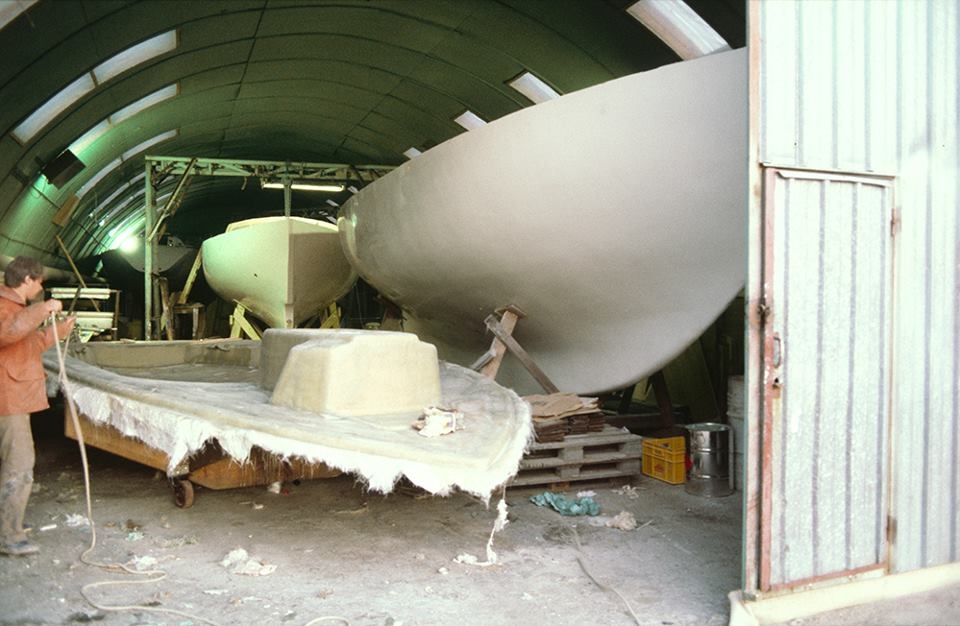
Porvoo 1981- 1982 we finished the deck form. Many hulls needed a nicely finished and sturdy deck made out of one piece. The CA-33 deck production started immediately for several CA 33 hulls that had been made earlier in Haapaniemenkatu.

Det Norske Veritas came into the picture and they supervised one CA- 33 building project. I had earlier drawn the boat plans to the famous classification authority. We continued with Det Norske Veritas to build the deck in Porvoo. We also made the bulkheads and bonded these bulkheads with lamination to the hull. Laying the keel ballast 4000 kilograms and laminating a bonding layer on the top of it. The floor console lamination to the hull was also within these rules.
We also made moulds for the floor and several other smaller moulds like rudder, companionway hatches and several smaller deck hatches.

We made the first two C-A -33 boats to Sweden as bare hull and deck, where we had Bjōrn Sherrer (“Marin diesel Ab:n CEO”) to represent our C-A 33 boat. We were lucky to get one of the hulls to Djurgården beach boulevard in the middle of Stockholm . Our representative in Sweden was “Lyckans Slip in Fiskebäcksil”, North side of Göteborg.
One Off Boats that we made in our new Porvoo Yard
Jussi Bremer made with voluntary workers a 1/2 tonner Tuula 7 in Porvoo. He left us a solid jig. We appreciated that a lot and built many racing boats on that jig.
Soon after this we made our own 1/2 tonner. Our team had designed this new racing boat. KPW ( Kairamo, Pohjola, Wiikeri ) Yacht design had drawn this new 1/2 ton class racing boat, S/y Solive
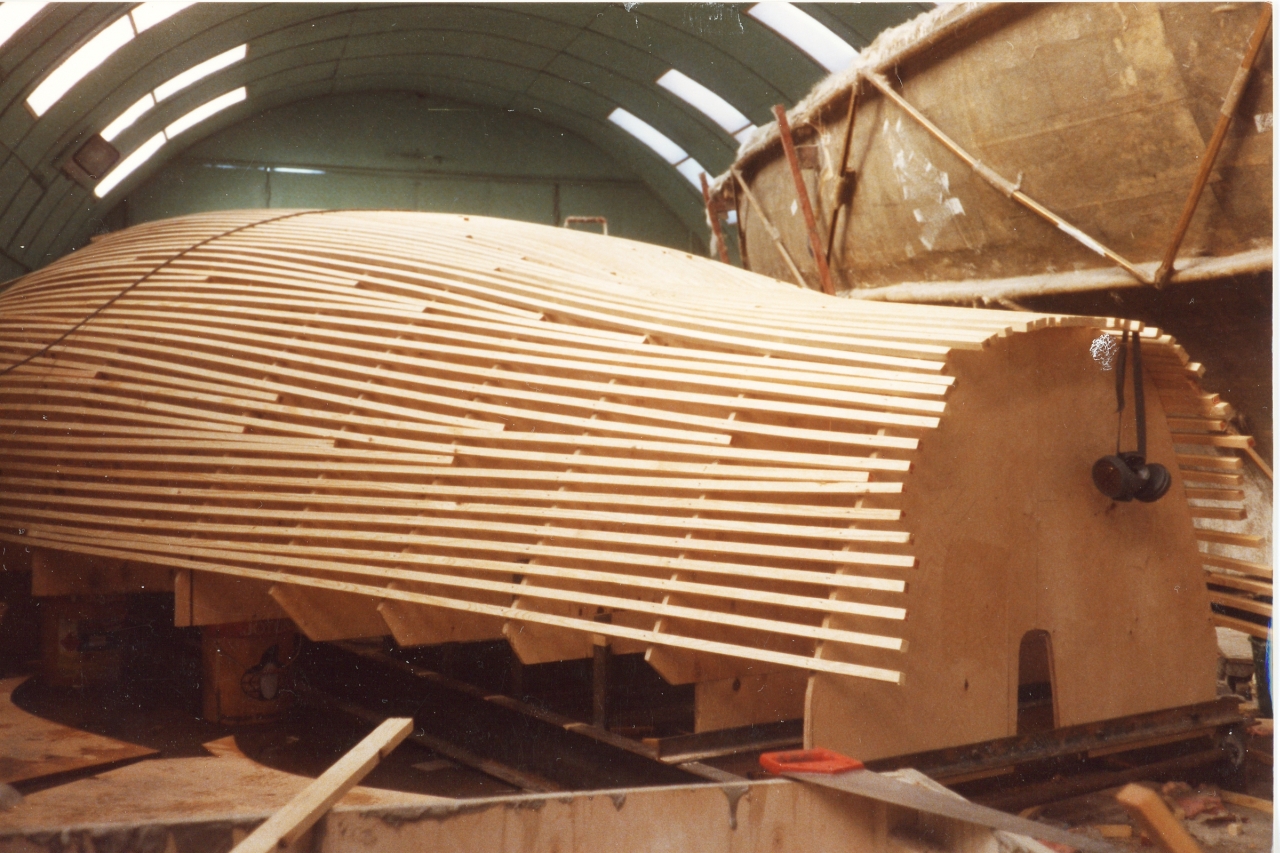
(KPW, Kairamo, Pohjola and Wiikeri). Design team: Jukka Wiikeri had just arrived from Southampton in England with a designer certificate in his pocket, Antero Kairamo acted as engineer in our team and as an expert of class rules. I drew the knockout drawings with Jukka Wiikeri still with hand drawing techniques in a sail loft in Laajasalo.
The 1/2 ton boat Solive, named by the sponsor (margarine manufacturer). It was as slippery as the product Solive itself and raced several years in Baltic regattas
Correction here from Hannu Manninen:

Thanks Pojack for the nice pictures and and an interesting history, Brings us good memories. I will correct one context mistake, when you mentioned 1/2 Tonners made by Framboat. S/y SOLIVE Sailed by SAM HARTIKAINEN so to say MR. MELGES SAILS, he had good luck in races. on the other hand, FINNAIR FLYERI was bought by us, Simo MYKKÄnEN and me from ITALy, where it was s abandoned after the 1985 world championship-Races. It was left standing on the hard somewhere in the beaches of Rome. We sailed the Half tonner to port grimaud and transported from there with a NAUTOR transport to TRAVEMÜNDE and with a ship to Sompasaari, Helsinki. From the same summer 1986 World championship contests we gained bronze medals, SIMPpa, BEPPE JOHANSSON, PEDE and JOHAN VON KOSKUL, JAMI KYYTInen and me. Late ANtero KAIRAMO was a technical advisor and a spare crew member for the boat. next summer 1987 open sea finnish championships, we gained silver medal. We lost a trace of hair to WB-SAILS half ton Rocket. SOLIVE was also with but I don´t remember the results. on the same finnish championship, KARI ÖSTERLUND lost his boat “Rantasipi” to the cold baltic sea, A huge hole on it´s freeboard.
Thank you Hannu!
From this boat S/y Solive we inherited a strong metal jig, where we made the coming special racing boats for 3/4 Ton Class World Championships in Helsinki 1981
Projects and planning for the future of Framboat boat yard
One Off Racing Yachts
We made an offer of a 1/2 Ton racing boat in the autumn of 1980. Project was aimed for the norwegian sailing team
The designer candidates were famous, Edward Dubois, Tony Castro, or eventually the famous Ron Holland. The boat was meant for the Norway market.
We had two jigs for the One Off racing boats and they were in full use always. There was also an outside builder that used our jig also in Porvoo yard, the builder/designer named Furustam. A carvel built boat made of thin wooden ribs, glued and nailed together on a frame. One layer of fiberglass mat with polyester on the top. A very light and sturdy eggshell construction for a smaller cruising/racing boat.
We also manufactured our Fram Dinghy to fill our spare time, plus all kinds of repairing works came to the yard in the winter months. Remembering old bootleggers speedboat repair and one interesting hydro copter modification project in fiberglass.
We took some sailing boats to winter service with some bigger repair or modification needs, we did also some reparation works for insurance companies.
I can dig out of my memory disc a couple of smaller X – yachts from the early production years, “the keel had literally entered” the cockpit. We made new higher keel stocks, and the boats sailed again.
Colin Archer 33 reforms and major changes in construction and sail plans

We made quite a big changes for the plug boat design that was made by Chrisse Lydman.
We removed the fiberglass whale deck construction coming up from the deck line. Fiberglass sides that made the hull sheer line quite high and was not supported by the deck. We constructed first a very strong hull and deck joint and then had decorative wooden lists above the deck line. We straightened the sheer line in the bow a bit to have a more original look. These wooden side lists are commonly used in old Colin Archer boats. The C-A 33 ballast got a lot more counter weight, approx. 4500 kg (instead of 1500 kg) and in the beginning a 16 m tall mast. We increased the mast height to 18 m. Big mainsail with a bowsprit and later on an aft boom in the stern, the mainsail boom was 6 m long and needed support to the hull.


Our plans: To produce our Colin Archer 33 boats, and have a separate One Off line with two jig places available for racing boats
Our plans were to produce the Colin Archer 33 boats was a big question. We tried to move the production of Colin Archer 33 over to Poland with Bjōrn Sherrer. Many negotiations in Poland with a yard called Navimor in 1980 and 1982. I had earlier worked with Kormoran Yacht Yard in Gdansk in Poland. We had discussions on that time already how to manufacture Colin Archer 33 in Poland, but we lacked good production moulds at that time. There were a lot of matters still to be solved how to start the manufacturing process in Poland. All the materials had to be transported to Poland. Even the polyester and various glass fibre materials. We needed certified quality in order to get Det Norske Veritas approvals. All deck fittings and the whole rigging, standing and running rigging. Polish workers were good with woodworking and they also had raw materials, mahogany, teak and oak.
I had figured out our problems in Framboat. We were able to sell only bare boats hulls in various stages. The prize was much smaller in comparison with finished yachts. The gross margin was also lower compared to the finished product. Also the amount of buyers were limited to these huge “self made men” projects. To finance a complete C-A 33 yachts building for such a long time.
To produce a finished yacht was overwhelming for a small company. We needed some other products also to finance the yards future.
In our budget for the years 1981 – 1983 there were optional product plans than just C-A 33 bare hull and deck production.
- Class boat Star did not have a producer, the need was between 5 – 10 pieces a year. Jukka Wiikeri was hired to lead Bensow marine section
- Jukka offered us production of a series of Sunwind 20 boats. Sunwind 20´ and the series consisted of 50 boats for the next 2 years. Nykra boat yard was in great trouble with the cheap Sunwind boat We would have been a subcontractor to Nykra yard. The boats must be made as cheap as possible and with no extra costs.
- We also negotiated to start with a Koster 28 project, which became later on known as a Degerö 28 from a small yard, Krister & co.
One off Racing boats
We never went into that game of producing a cheap lightweight family boat. This was not what we had been doing, a strong double ender with eggshell construction and our own brand Colin Archer 33.
We also manufactured specially designed One Off racing boats. There we had a chance to use our knowledge in design knowledge and new materials.
Helsinki become the organizer of 3/4 ton world cup in 1981. Now finally we a good change, we had craftsmanship and personal with academic degree in boat design and building. Pepe Toroi came to work half time from Southampton where he was learning boat design and building. He would join our forces.

Mika Saksela and Juha Wiio, our racing sailors and my friend Sakari Katiskoski and my partner Pekka Piironen, this was the team. We were all ready and committed to these projects. We had also back up from naval architect Antero Kairamo who acted as a technical supervisor in one of the boats.

We grabbed the challenge and built two One Off racing boats for this race, the 3/4 Ton word cup in Helsinki.
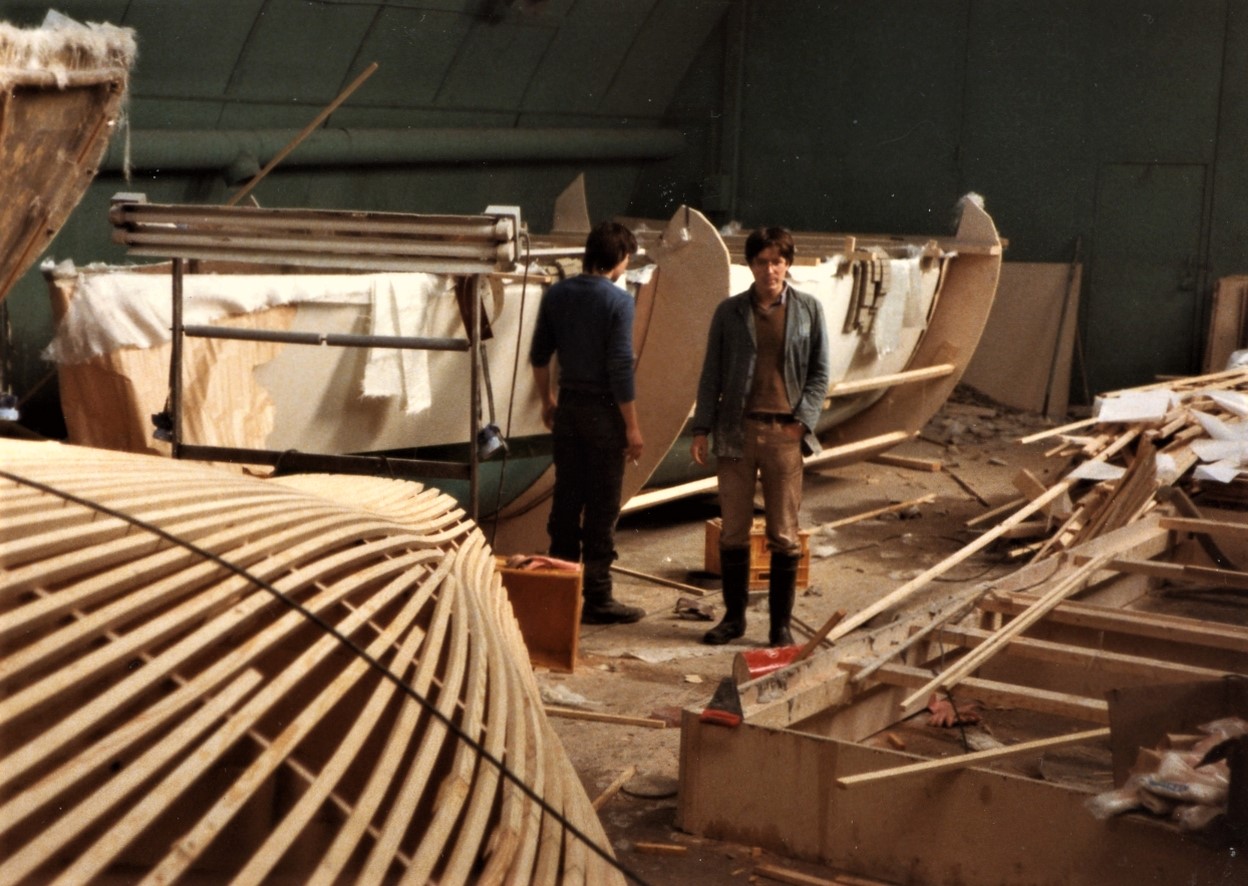
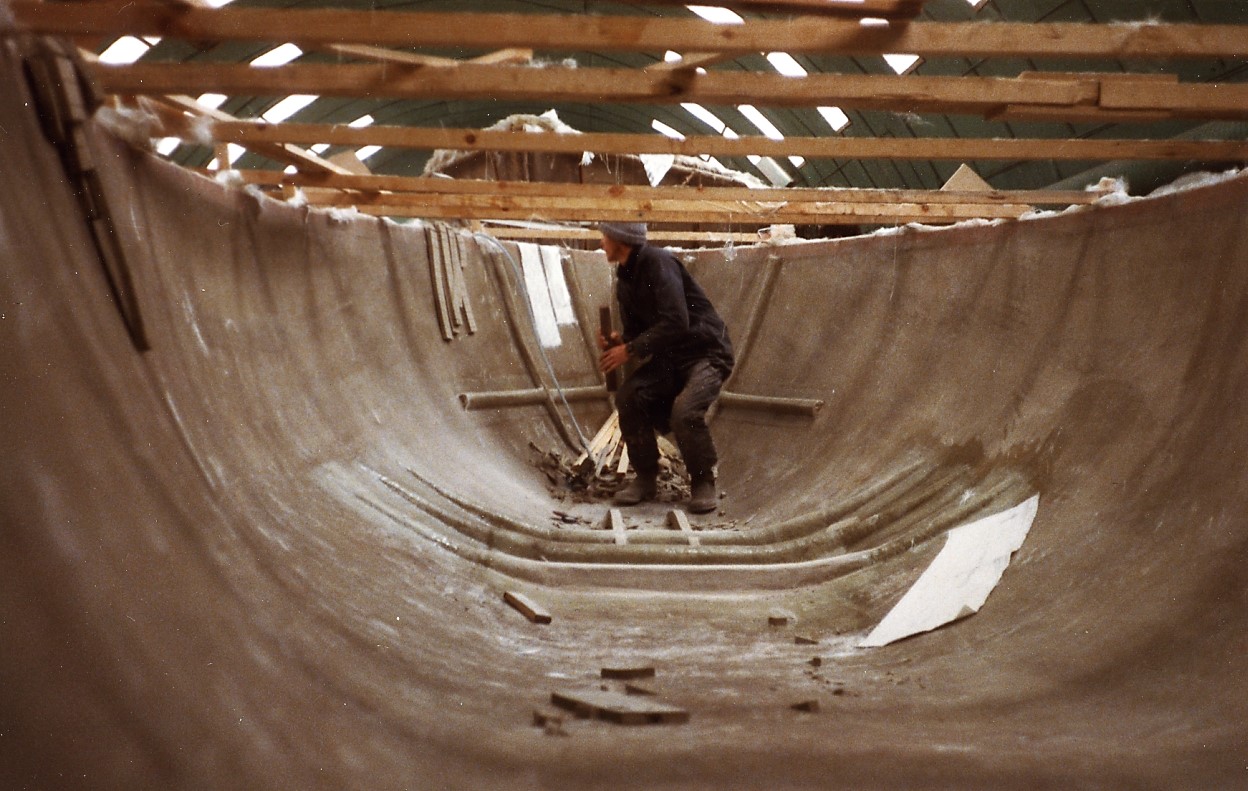
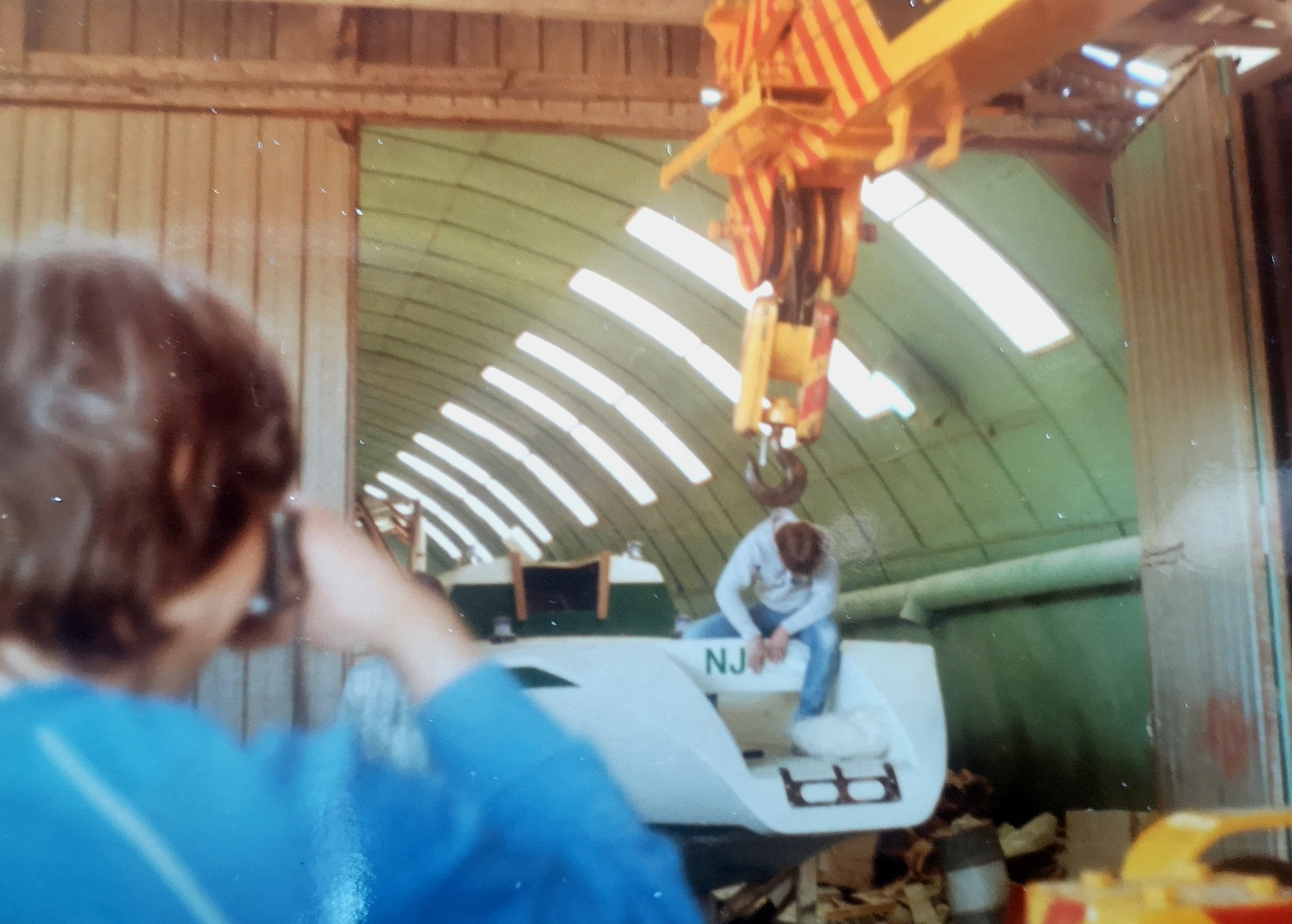
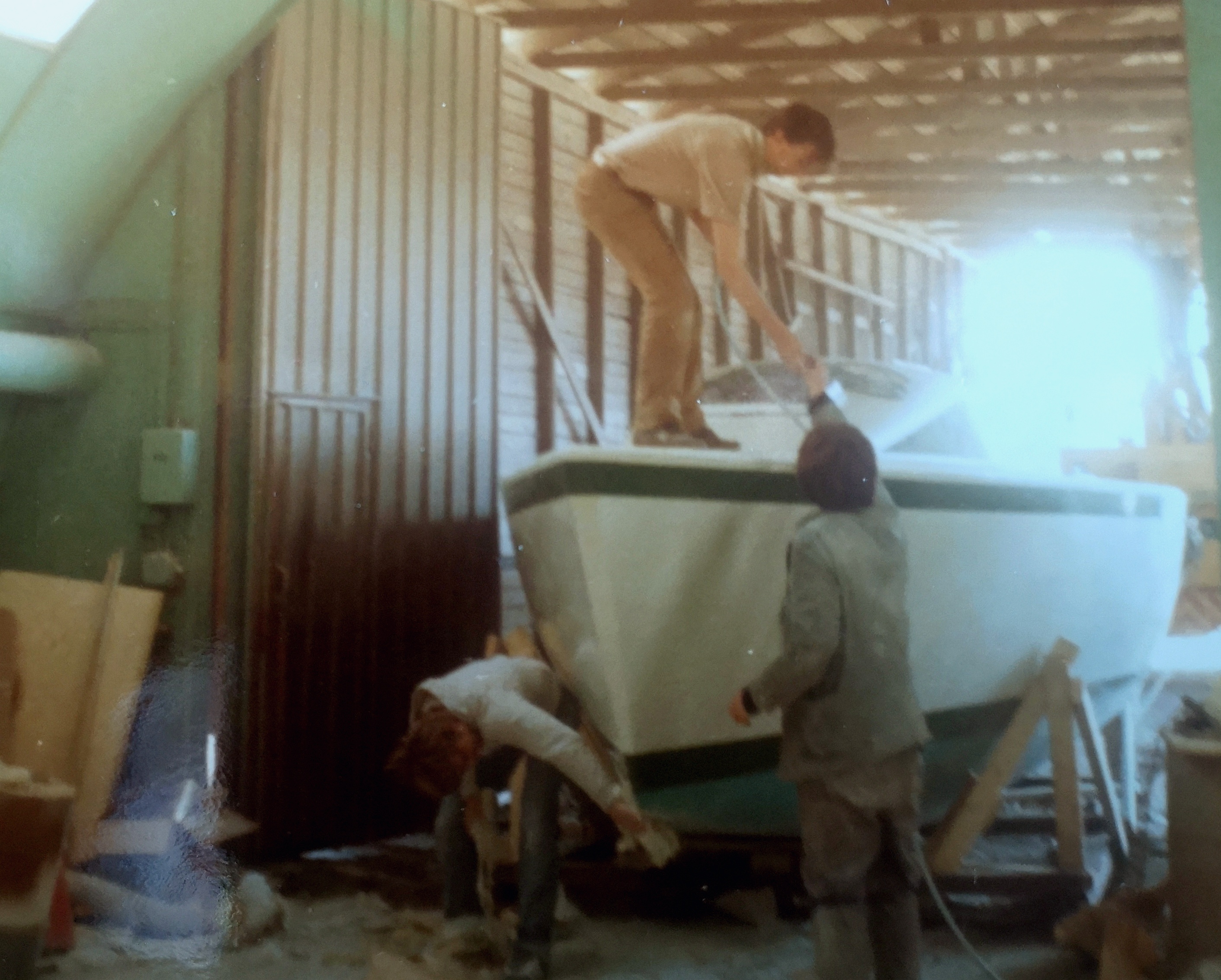
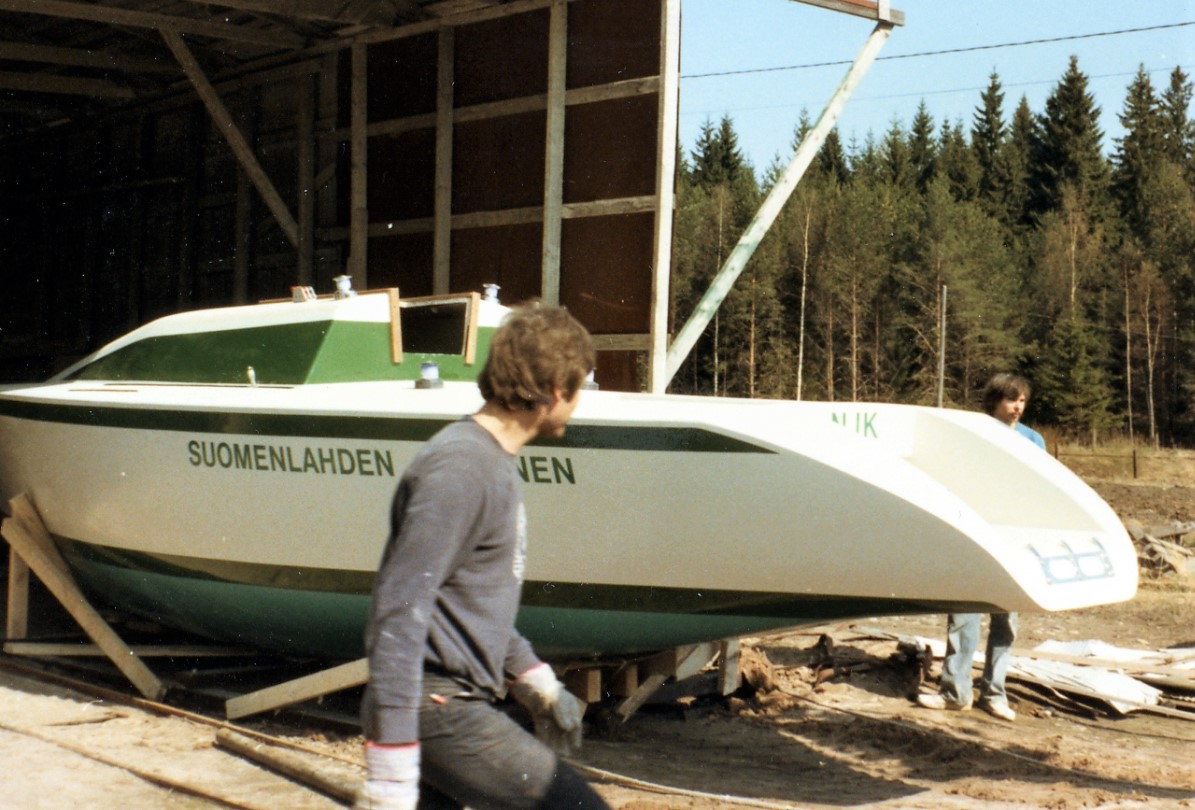
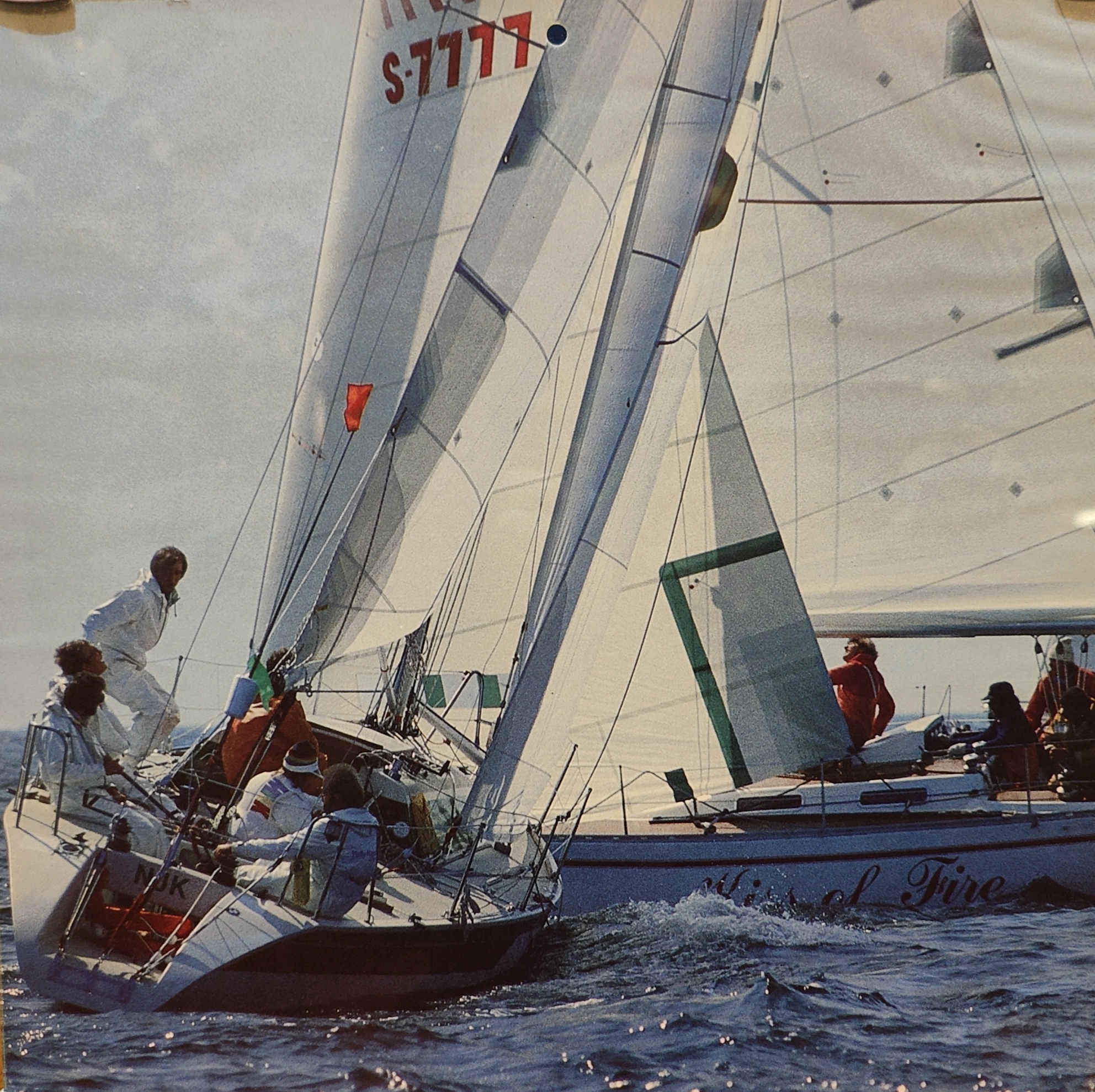
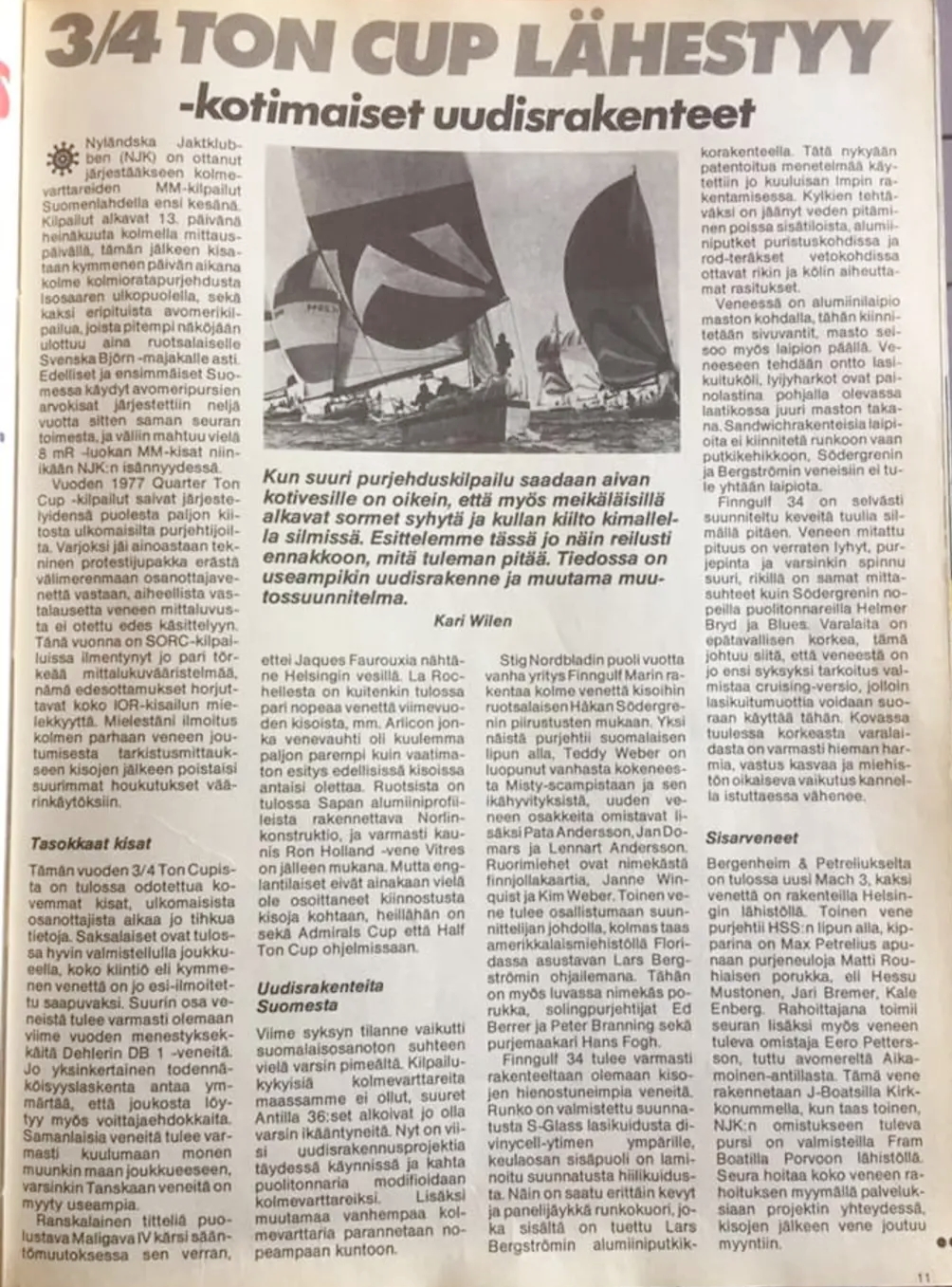
The first boat was ordered by NJK (Nyländska Jaktklubben) in Helsinki. The two designers were, Max Petrelius and Christian Bergenheim. Christian made the lines plans and the lofting of the frames with computer aided techniques. The boat was made of directional fiberglass and Isoftalic Polyester. The core material was Divinycel. These materials in order to get more stiff boat. The boat had keel stocks and stringers in the bow. The aft of the boat was stiffened with double laminate (with new core material) and bulkheads laminated to the hull. In the crew was also Harry (Hjallis) Harkimo.

The other boat was ordered by PRW Team ( Peter Perovuo, Risto Ryti and Markku Wiikeri) and it was designed by a famous naval architect Ron Holland. Ron Holland took the job with our small boat yard because he anyway pendled to Pietarsaari to Nautor yard. This was the reason I later on met Olle Emmes who was the financial director of Nautor and also Björn Wilhelm Schauman who acted as sales representative and after sales services provider for Nautor in Spain. I had a chance to visit Nautor and see how they made these word famous Swan boats.
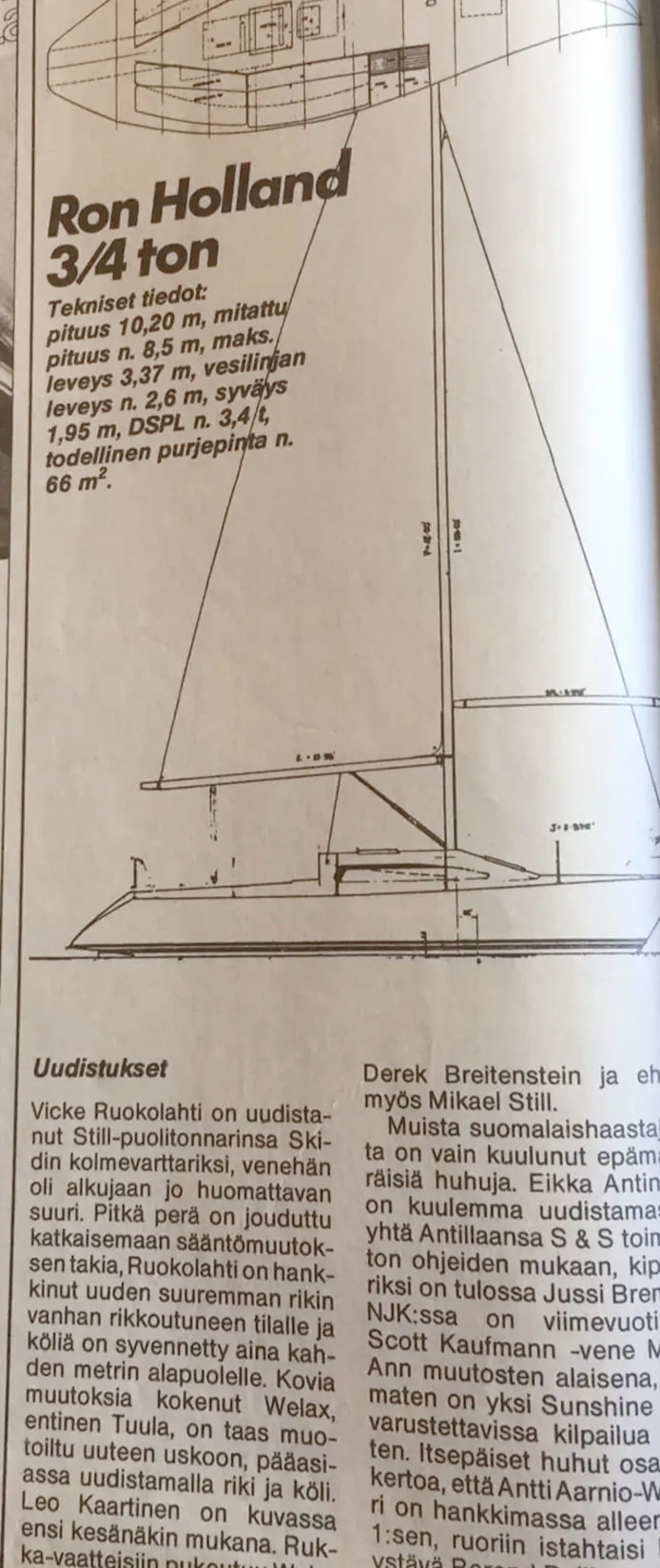
The PRW team boat was made out of exotic Kevlar fibre and was laminated with epoxy. Core material was balsa both in the hull and deck. Only two layers of Kevlar each side and a thin layer of bonding chopped fiberglass mat in between the Kevlar layers. Inside the boat, there was a solid fiberglass keel area. On the top of that a special aluminium “keel stock frame” was laminated to the solid bottom laminate. The Keel frame was constructed in special aluminium in Finnair (Our national airline company) On this special keel frame construction the keel and the shrouds were also attached. This construction made the boat extremely strong. By this construction we gained optimal weight balance with the bow and aft. Also the frame had a radical effect of the lightness of the boat. The keel and the shrouds were attached to that aluminium frame.
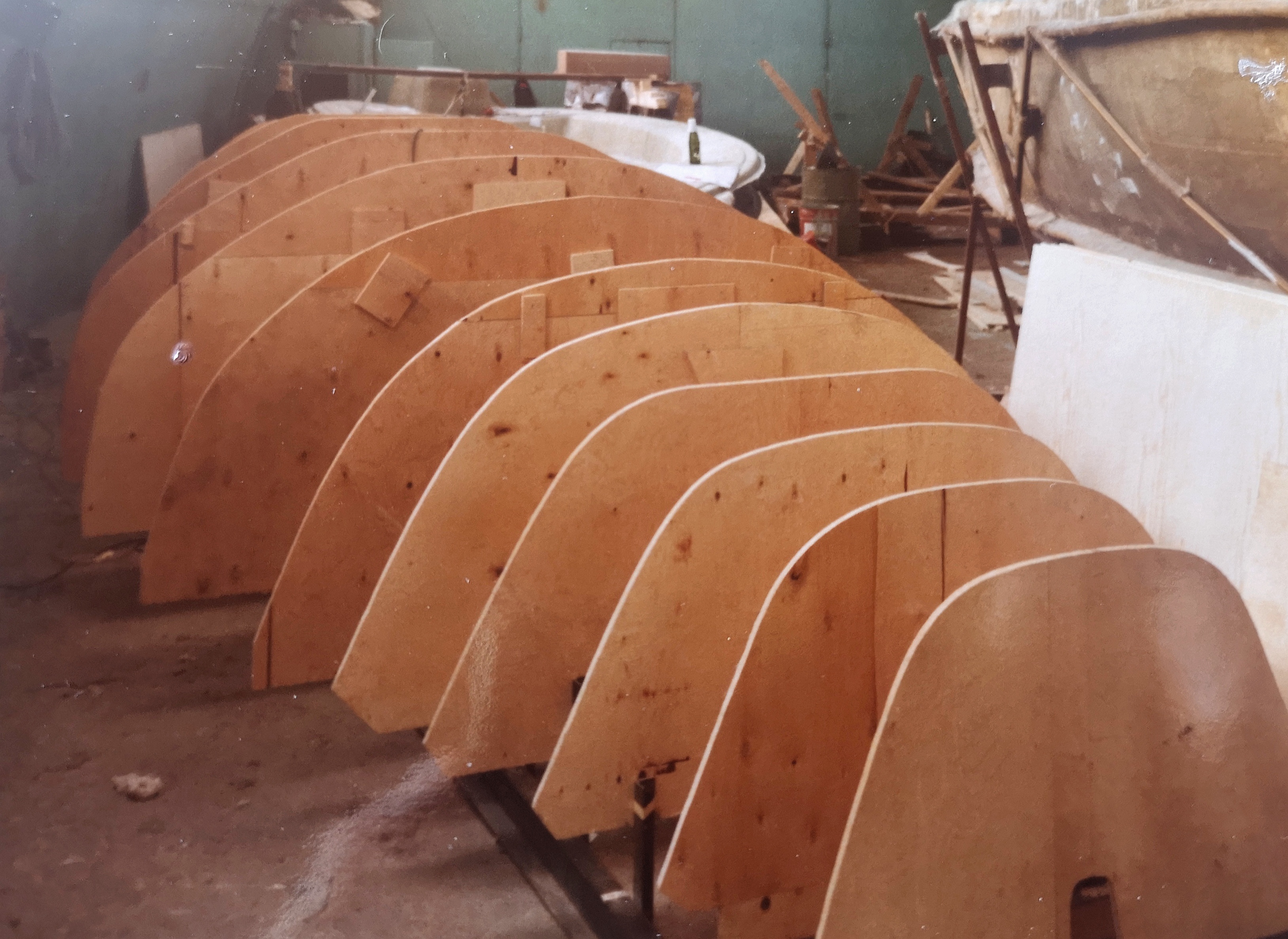

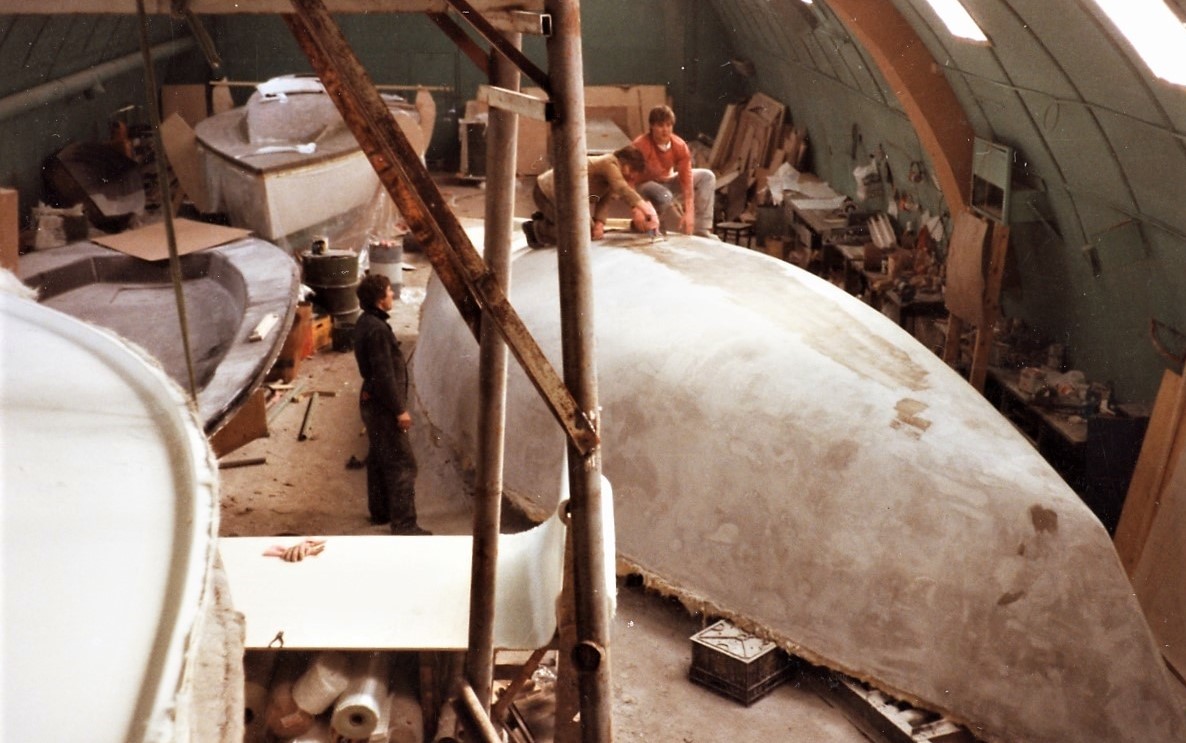
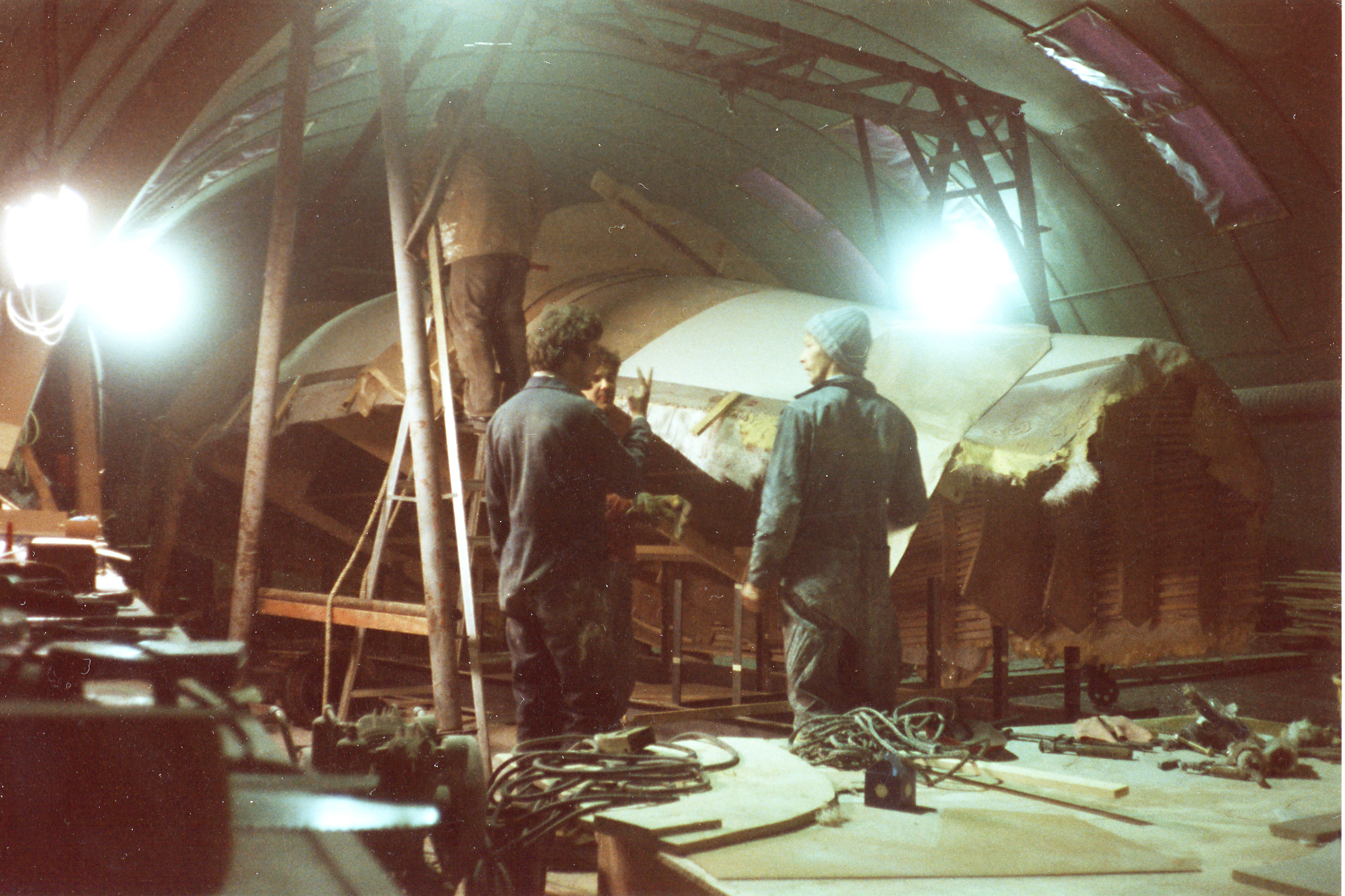
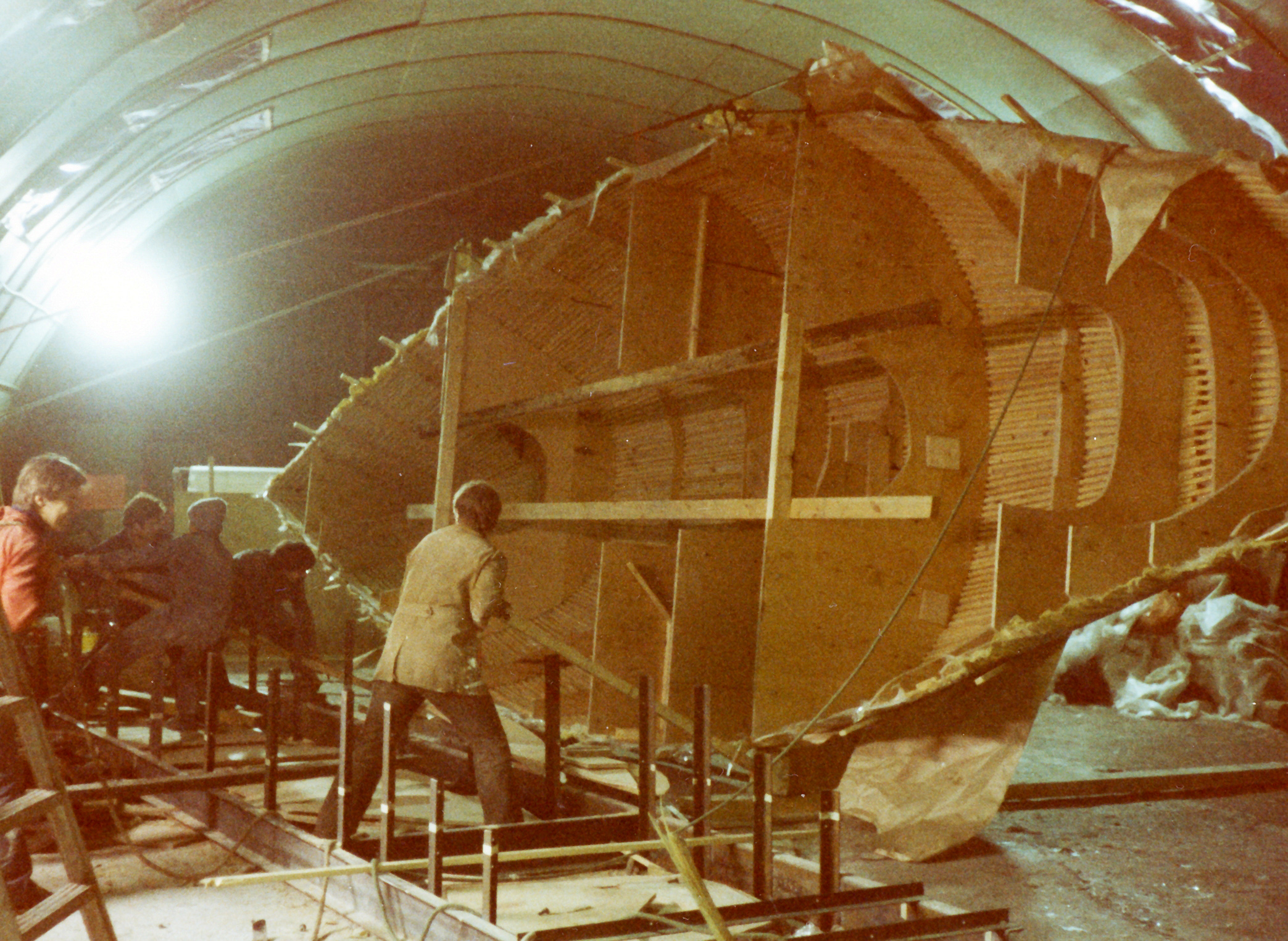
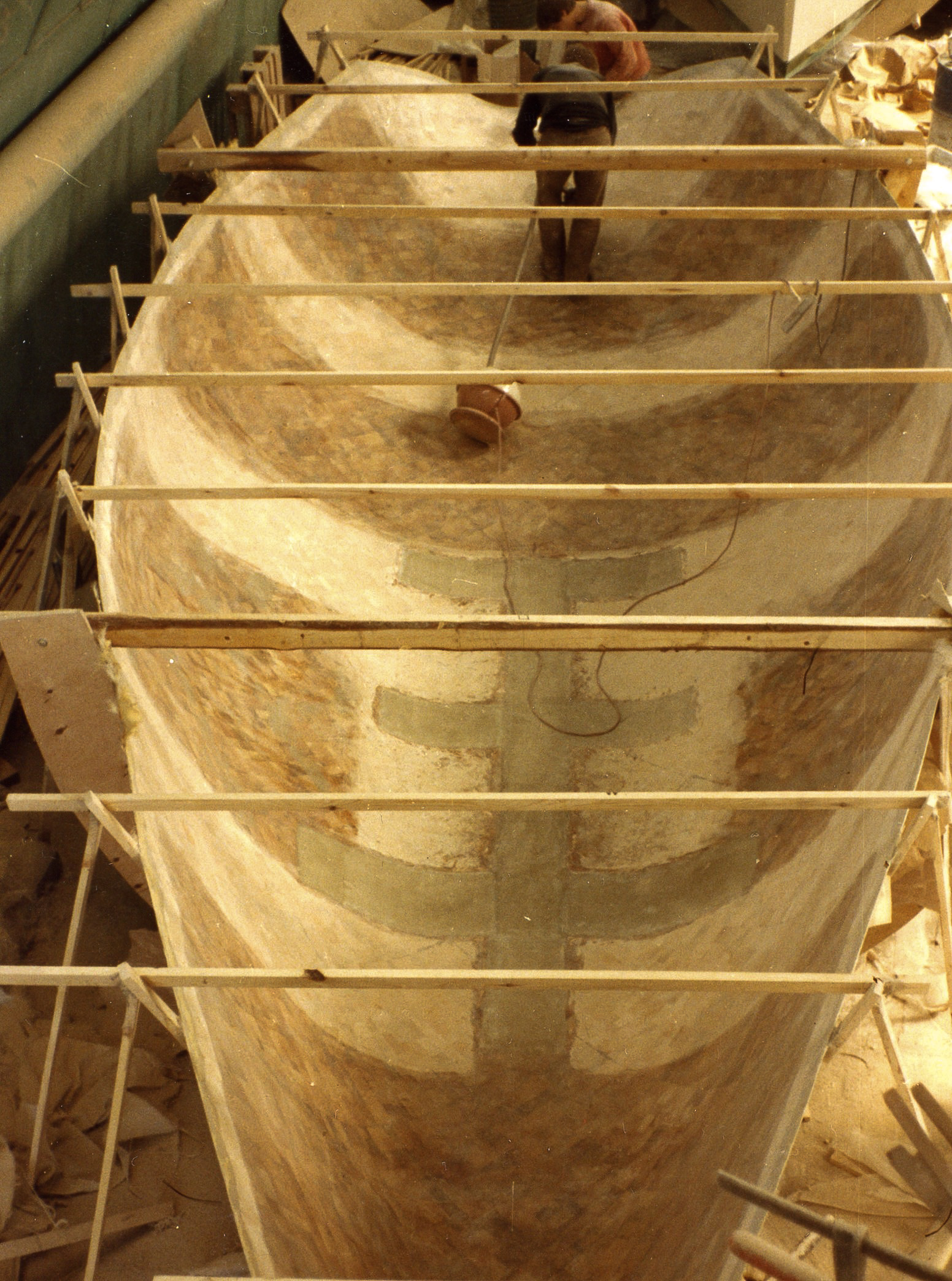
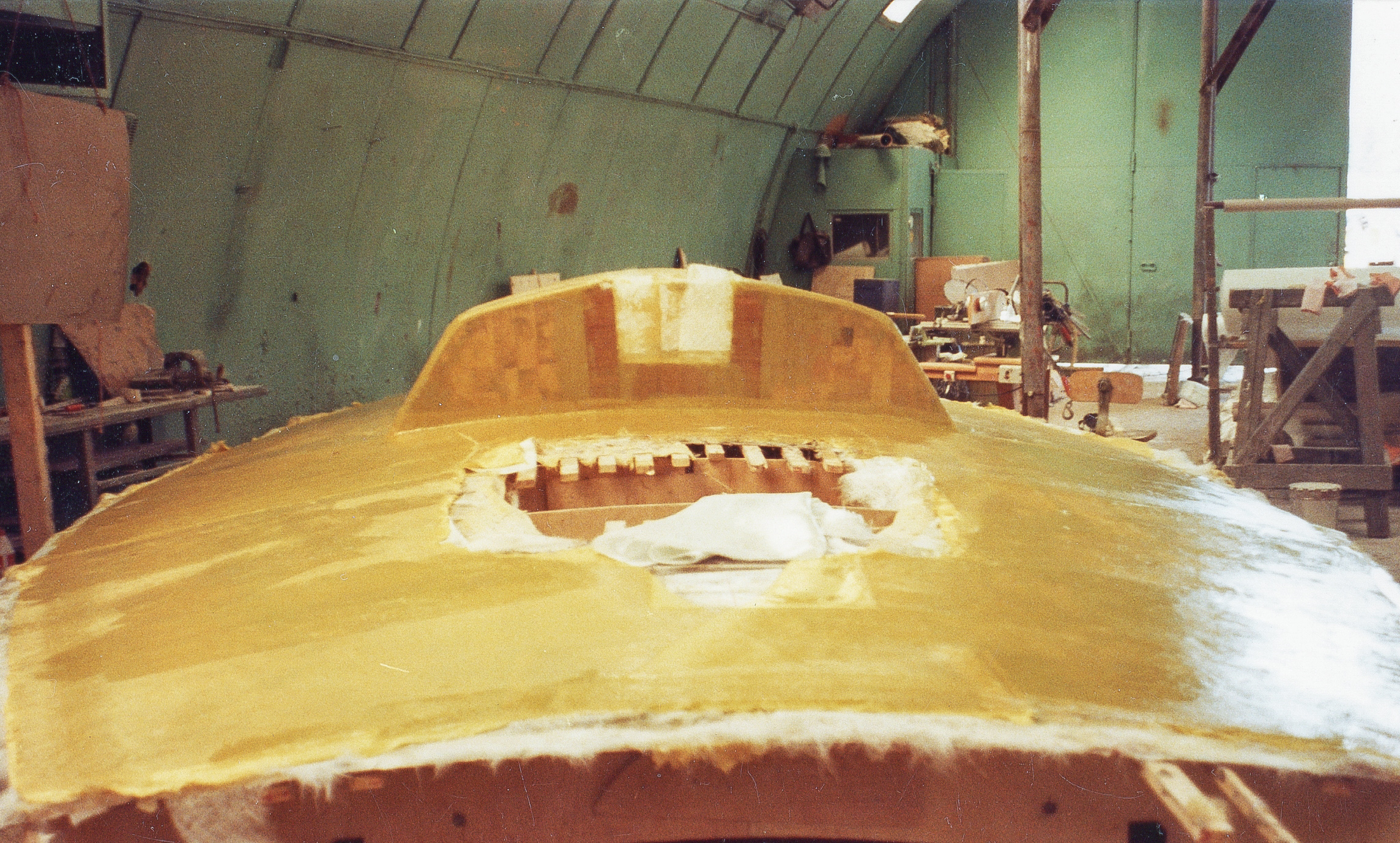
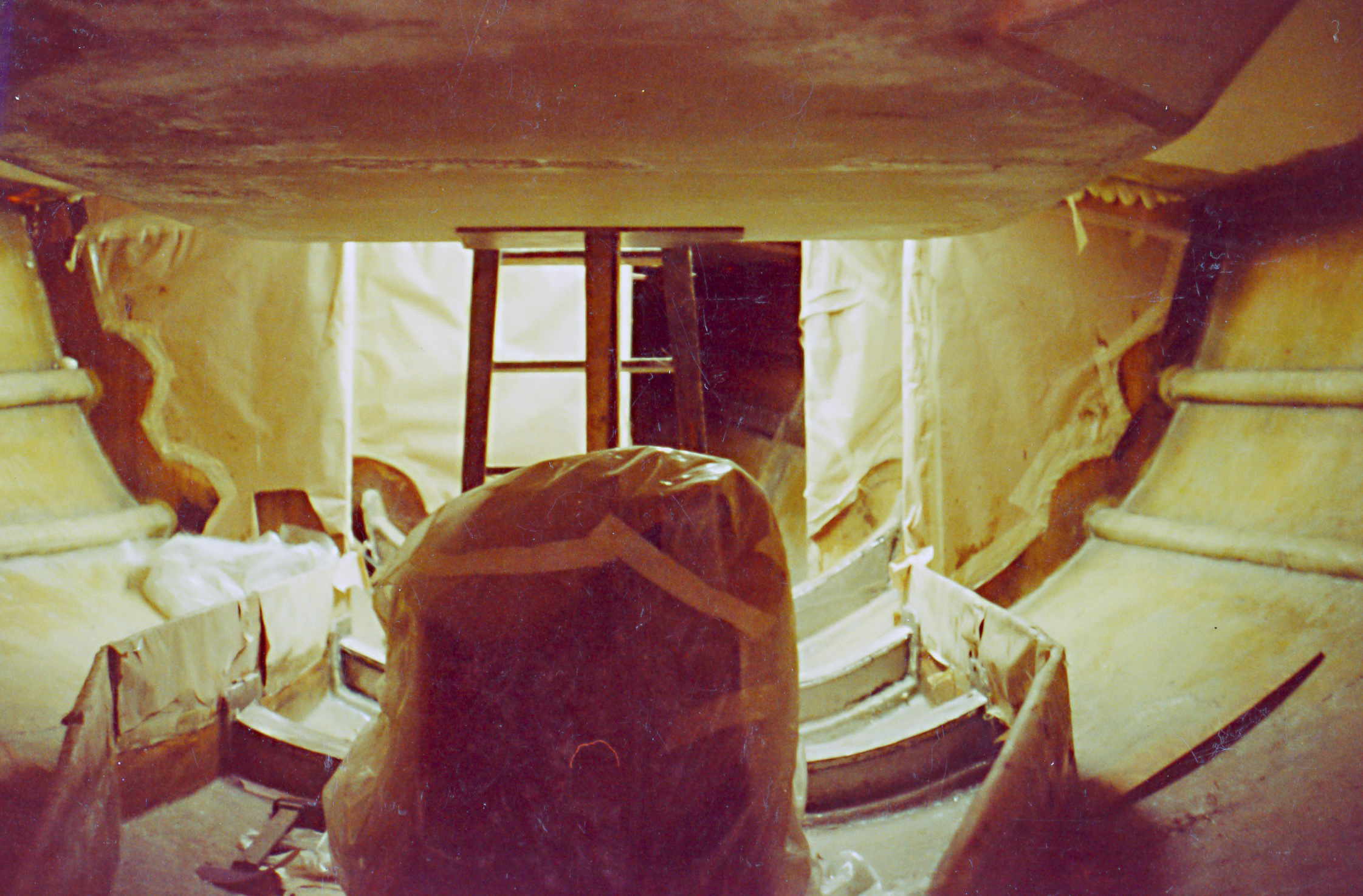
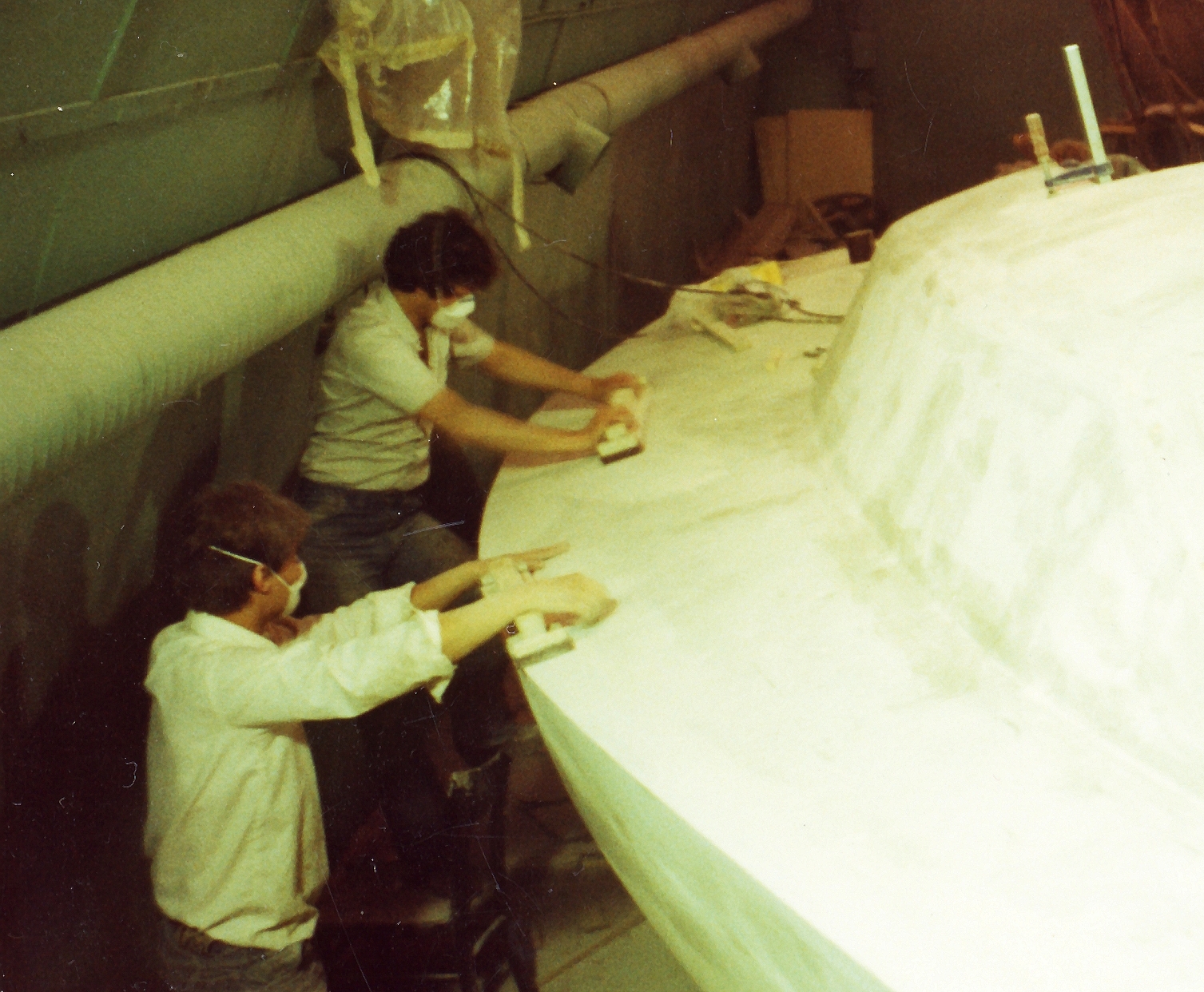
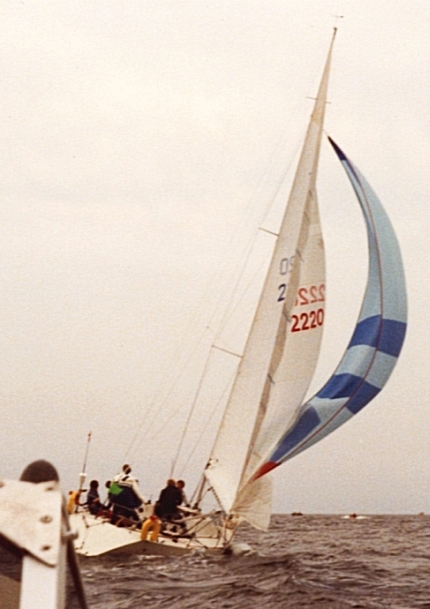
Racing boat projects were extremely crude economically and they consumed the funding of a small boat yard. We started directly the Colin Archer 33 production for full when we saw some spare time between and after the racing boat projects.
Back to Colin Archer production
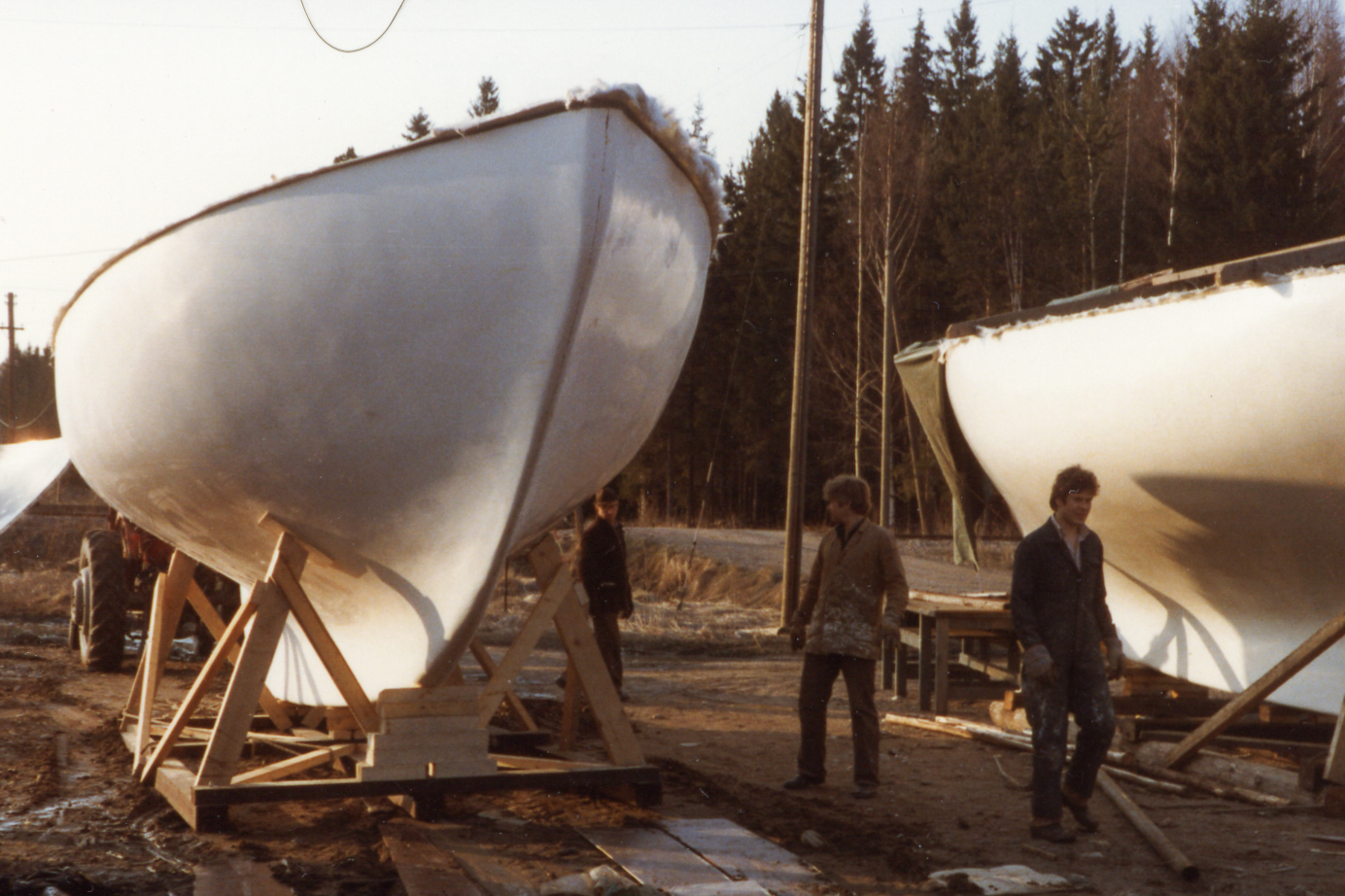
We made 4 – 5 more of these C-A 33 hull and deck stages for Finnish customers. In addition many more decks had to be made for the hulls waiting on our yard in Porvoo. To Sweden we built one C-A 33 with the keel weight, bulkheads and flooring , rudder plus engine, engine shaft and mounting. We launched that boat in Porvoo river and motored the boat to Helsinki with the owner. One more bare hull and deck to Sweden.
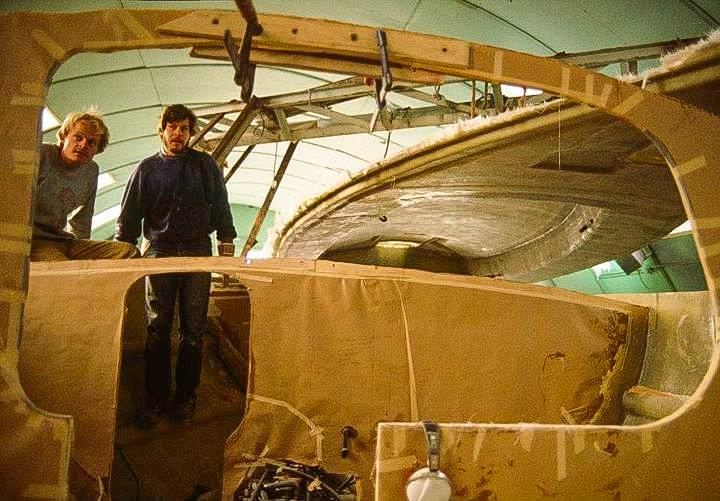
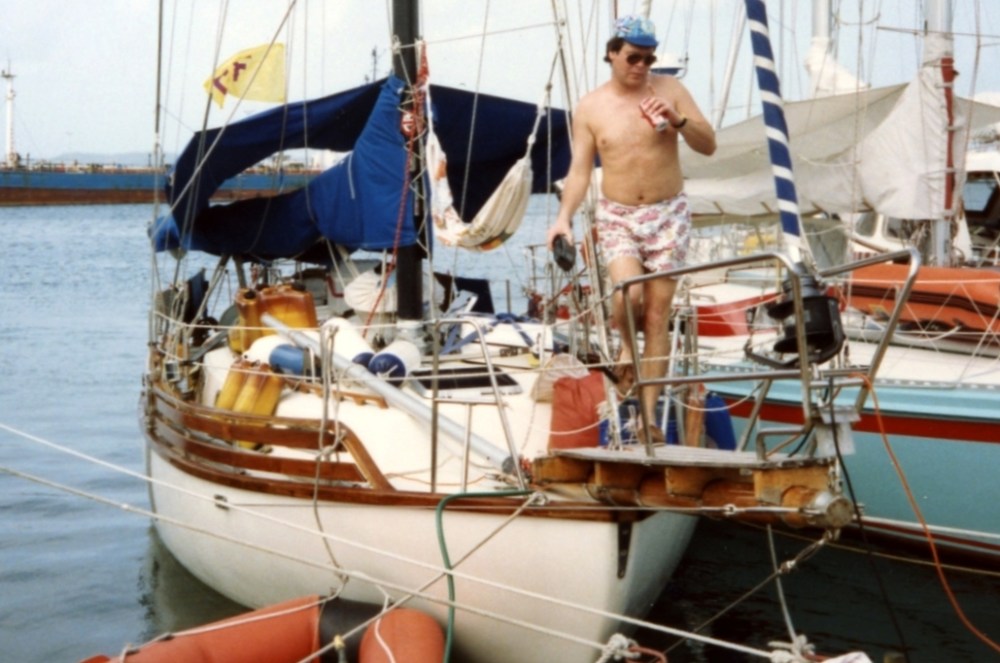
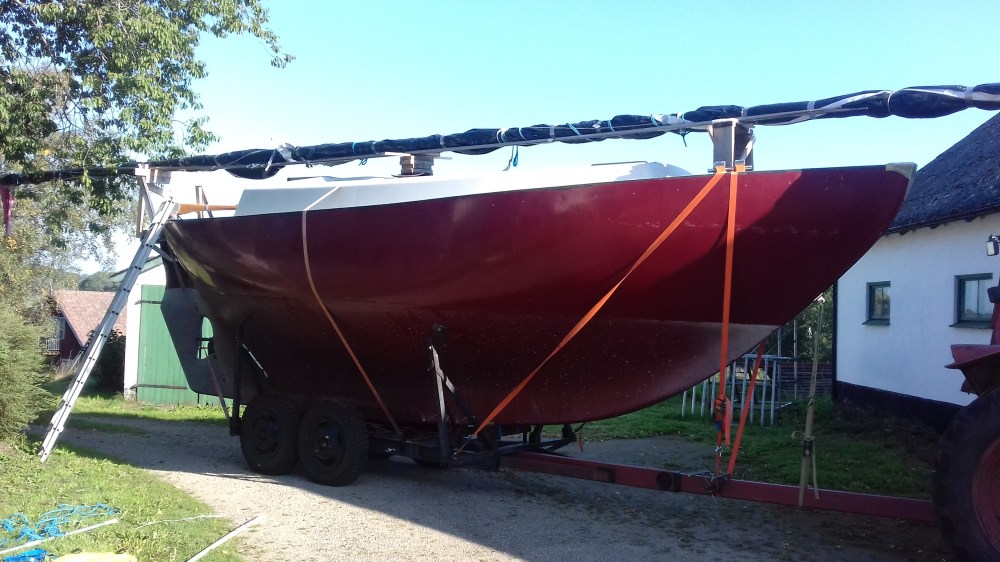
One red boat we delivered with a truck to Åland Islands, to Mariehamn. One of the first decks we delivered was to a Finnish boat that was delivered to an old wooden boat builder in Porvoo he was famous for the quality of interior wood works. He finished an ultimate interior for S/y Rock “n” Roll. The last of the C-A 33 boat made in Framboat (hull and deck) delivered out from the yard to Lars Ådahl, he laminated the hull by his own boys, we still made the more complicated deck to the boat. We had already agreed to leave the hall and the premises in the year 1984.
Here a C A 33, L-11 to Tapio Knopp without the fiberglass deck. His son Teemu Knop made later an Atlantic crossing with that boat.


C – A 33, L – 18, S/y Sjöa was delivered to River Porvoo, sailed together with Pär Domej to Helsinki

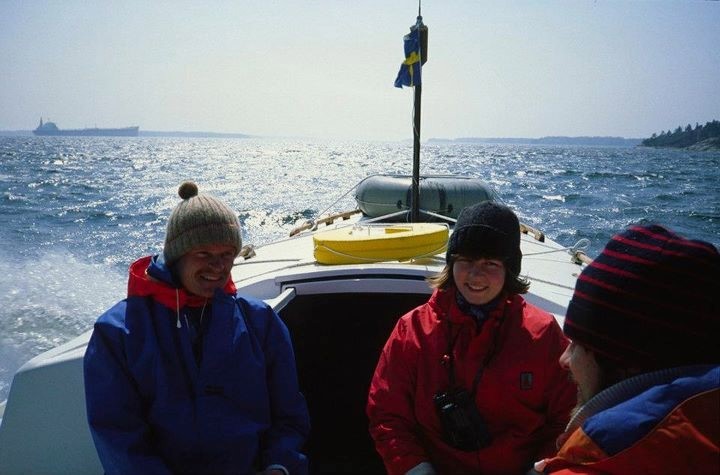
Otto Kuojärvi and Juha Wiio our crew for the delivery trip
This was the last boat to leave Framboat boat yard in Haxi, Porvoo. Lars got out last minute with his C-A 33 hull and deck before we closed the doors for good
C-A 33, L – 19, Lars Ådahl, S/y Bijou
The last of the C-A 33 boats made in Framboat (hull and deck) delivered out from the yard to Lars Ådahl, he laminated the hull by his own boys, we still made the more complicated deck to the boat. We had already agreed to leave the hall and the premises in the year 1984.
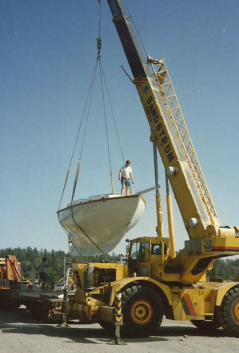
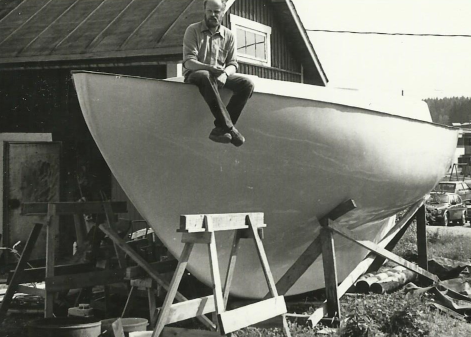

Lars Ådahl saw this C A – 33 in Helsinki boat show 1981, but he contacted me years later in summer 1984 to get himself a CA – 33 hull and deck. But we had already made the decision to close the yard of Framboat. We gave him my drawings of the construction of a solid hull with the laminate and stringer drawings plus some advices. Our Mika Saksela made him the deck for the C A -33 hull. The last hull was lifted out from the hall with forms and some private entrepreneur lifted the deck on the hull. He had the hull towed to his home to be fitted. The glory day was early spring in 1987 when Colin Archer 33, S/y Bijou hit the sea.

C A – 33 boat, L – 15 delivered to Hans Wikstöm today found a new owner John Eriksson from southern Sweden
This is one is one of the last found C A – 33 boats, L – 15 in the year 2022. The boat was originally delivered to Hans Wicksröm to Åland.
Now here is a new boat for the new owner from southern Sweden. The boat had been in a shed all these years. John Eriksson, who contacted me 2021, and as a result of this conversation I sent him a full set of drawings about Colin Archer 33. He is a professional carpenter making musical instruments. We wait for the results. A new Colin Archer 33.
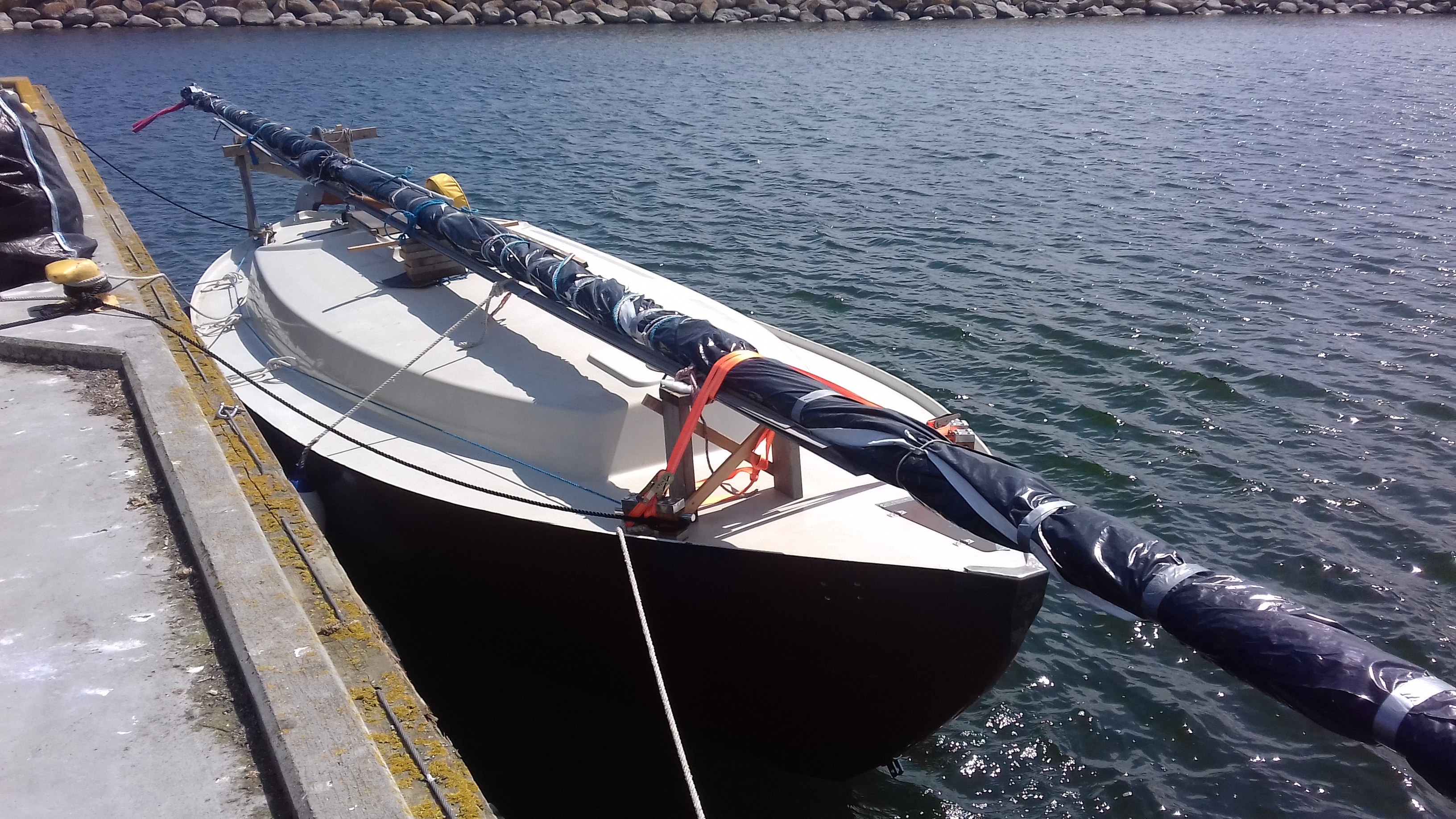
This is one of the last found C A – 33 boats, in 2022, L – 15
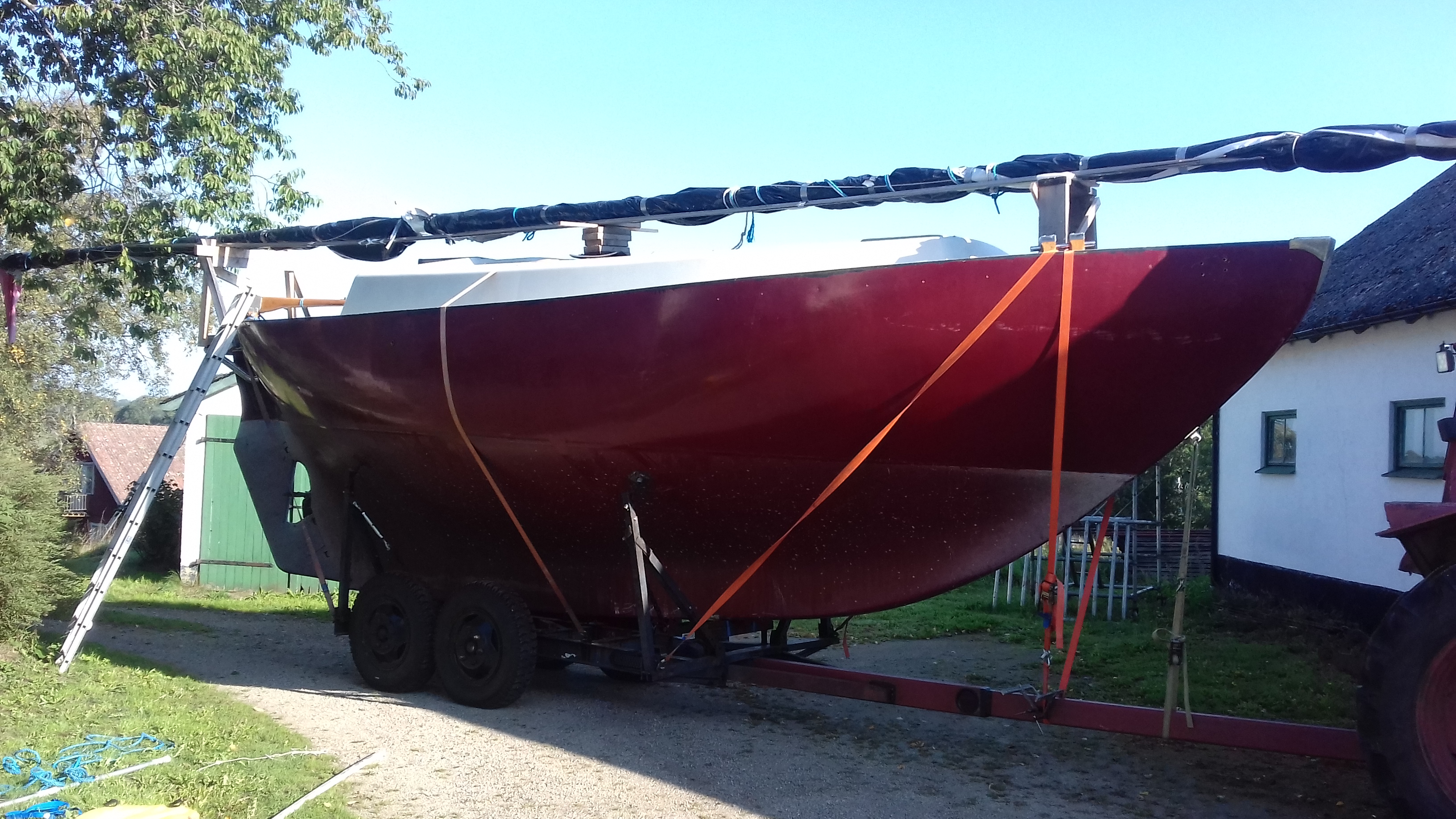
I decided 1984 to finish the boat yard activity, because it was not suitable for a small company. The costs of a big warm, well ventilated hall space in cold Finland and the cost of making several huge moulds for the boat. The series of manufactured boats were still very small. We made a total of 15 C A-33 boats, three C A -33 were made before us.
We made our own part of Finnish boat building history and our products are still sailing after 40 years. Colin Archer 33 Yachts have circumnavigated the globe and are sailing in the Baltic sea, Mediterranean sea, Caribic and The great lakes in Canada. Even the small Fram dinghies have served well the customers.
I do not have many photos of the Framboat history, my photo archives destroyed later on. I have got quite a few photos from my customers, Colin Archer 33 sailors.
I would still like to have here a few more photos of C A – 33 boats:
CA-33 L 4, CA-33 L 5, CA-33 L 6, CA-33 L 7, CA-33 L 8, CA-33 L 9, CA-33 L 14, CA-33 L , CA-33 L 17, these serial numbers are still missing
We have nowadays a face book site of “Colin Archer 33”
jukka.pohjola@gmail.com
I repepat a few used methods in constructing Colin Archer 33 hulls. These methods have a significant reason how 40 year old boats last so well.
- The biconvex hull shape, solid hand laid fiberglass construction of the hull. Hull laminate is made with a lot of fiberglass rowing mats. Hull is stiffened with a lot of vertical and horizontal stringers, which share the whole hull into panels with width of approx. 70 x 70 cm.
- The deck of a Colin Archer 33 has a significant curve and a bridge deck, small cockpit. The deck is laid with a sandwich construction, core material is divinycell and balsa.
- The joint between the hull and deck is formed as a fiberglass footlist bolted through with s/s bolts, outside the deck level. The joint is also completely bonded and laminated inside together with fiberglass..
- Teak bulkheads are tapered in the hull bonding and laminated. In order to get a right and very strong joint and to share forces even to the hull.
- Wales, bow fittings and rudder hinges are over measured and bolted to the hull with laminates and mechanical joints.
- Keelweight, (boats made in our yard) is laid with it´s whole length in Polyester and Kevra microball putty. The keel weight is laminated on the top to hull sides.
- The rudder is made of two halves with s/s construction welded to the rudder shaft. Rudder halves are filled with two component foam and then bondet with fiberglass together. Three s/s hinges are attached to the shaft and bolted to the hull.
Colin Archer 33 Boats from their ocean passages
(Here all photographs are from the boat owners archives and only lended here.)
Otto Kuojärvi, C A 33, L 12, S/y Rock “n” Roll, Circumnavigation 1989 – 1994
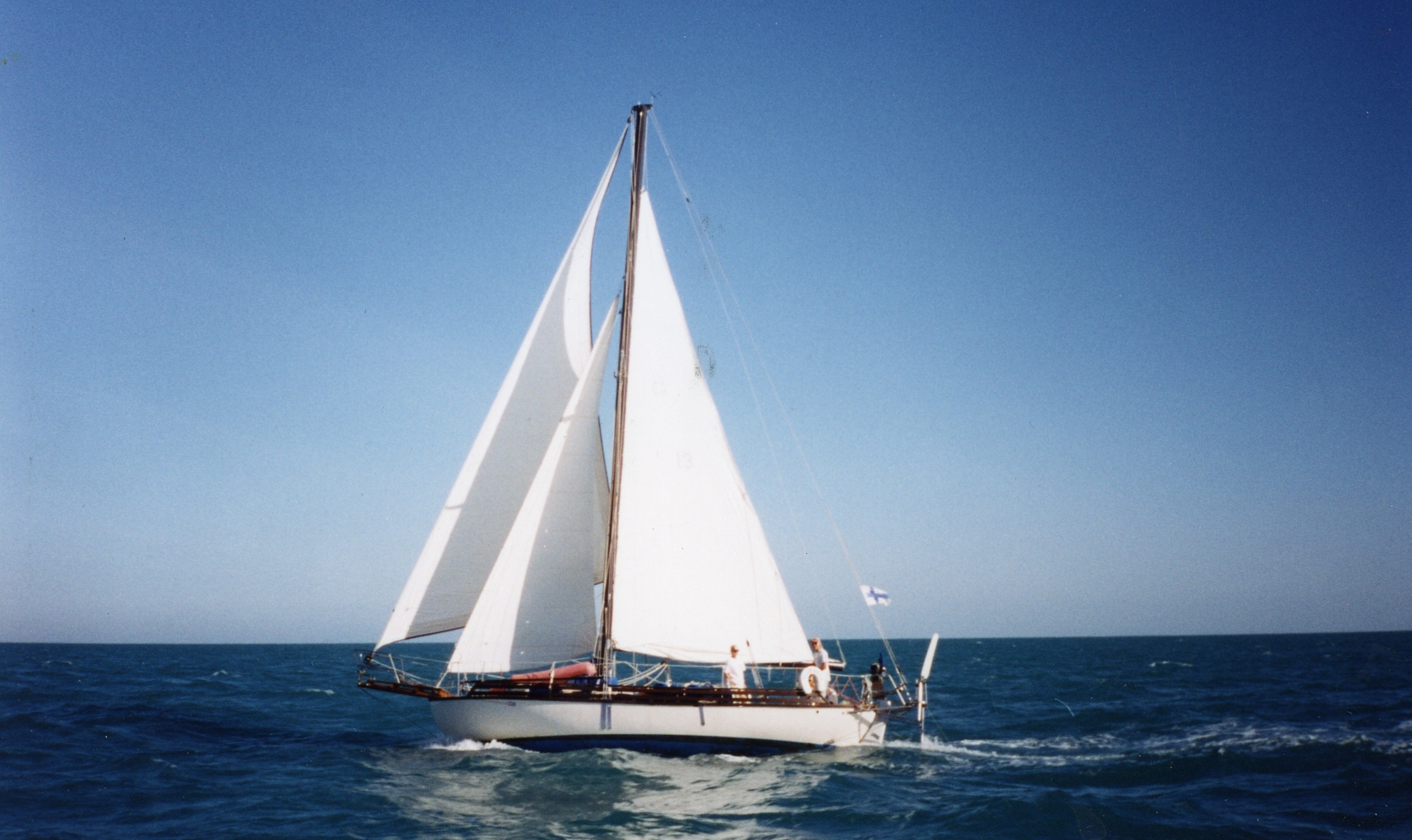
C-A, L- 12, Pacific ocean, Otto Kuojärvi

Otto and Jukka in the background
S/y Rock ‘n’ Roll, C A 33 L- 12 in Panama Canal, the boat builder Jukka on the bow
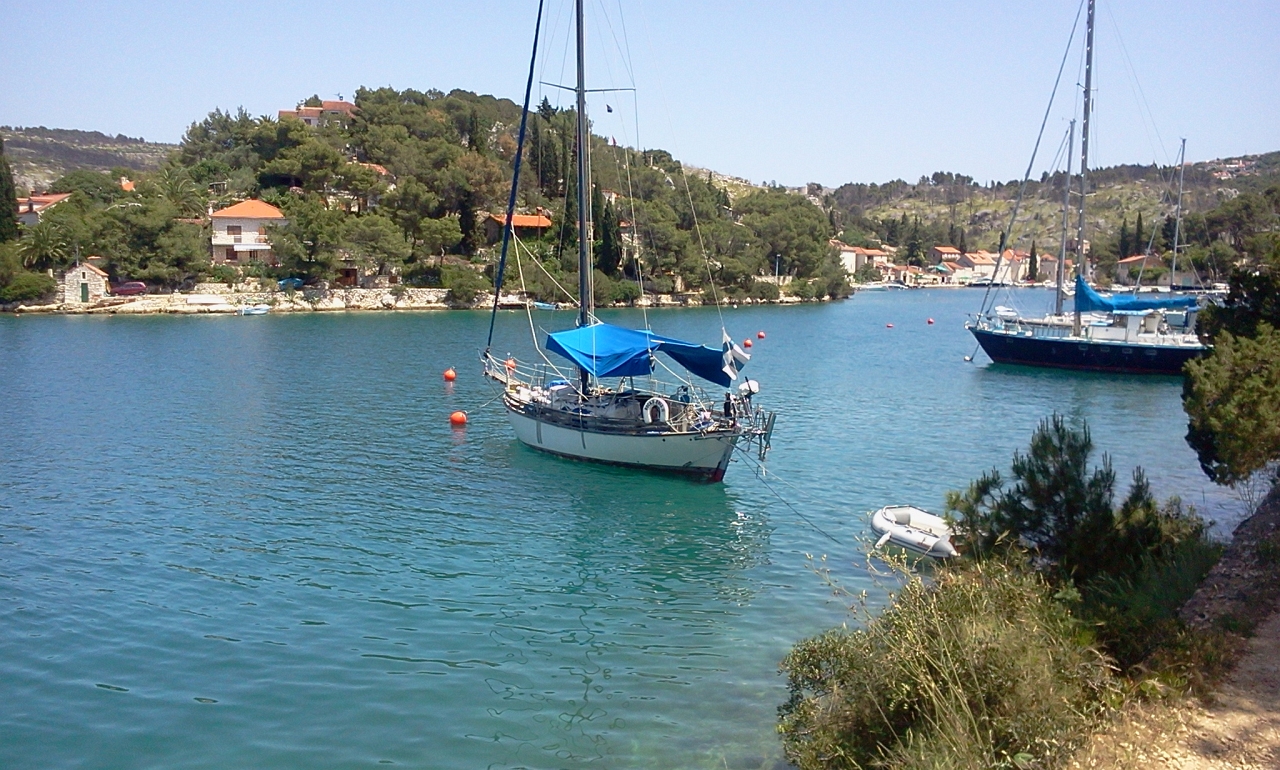
Pär Domej, CA -33 L 18, S/y Sjöa Atlantic Crossing, Pacific and the Great Lakes
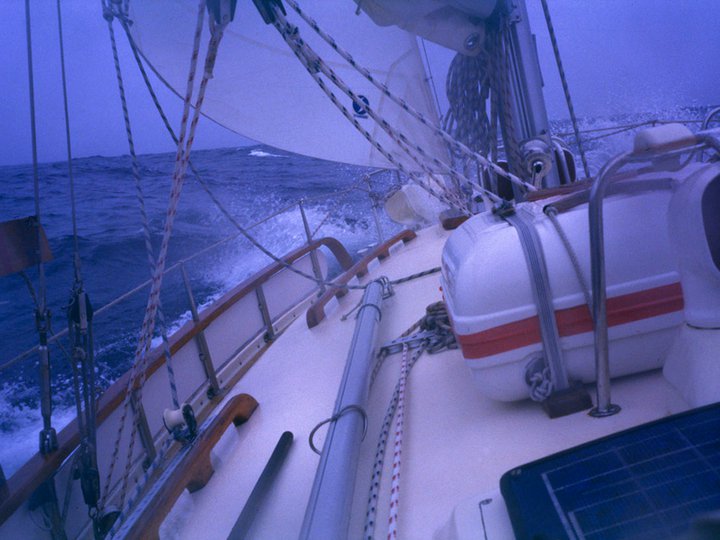
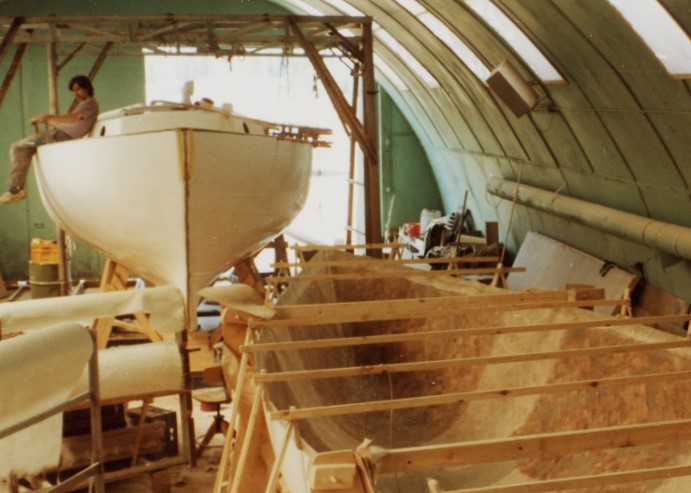
S/y Sjöa sailing – preparing the C A 33hull
 C-A 33, L-18, photographer
Pär Domeij
C-A 33, L-18, photographer
Pär Domeij
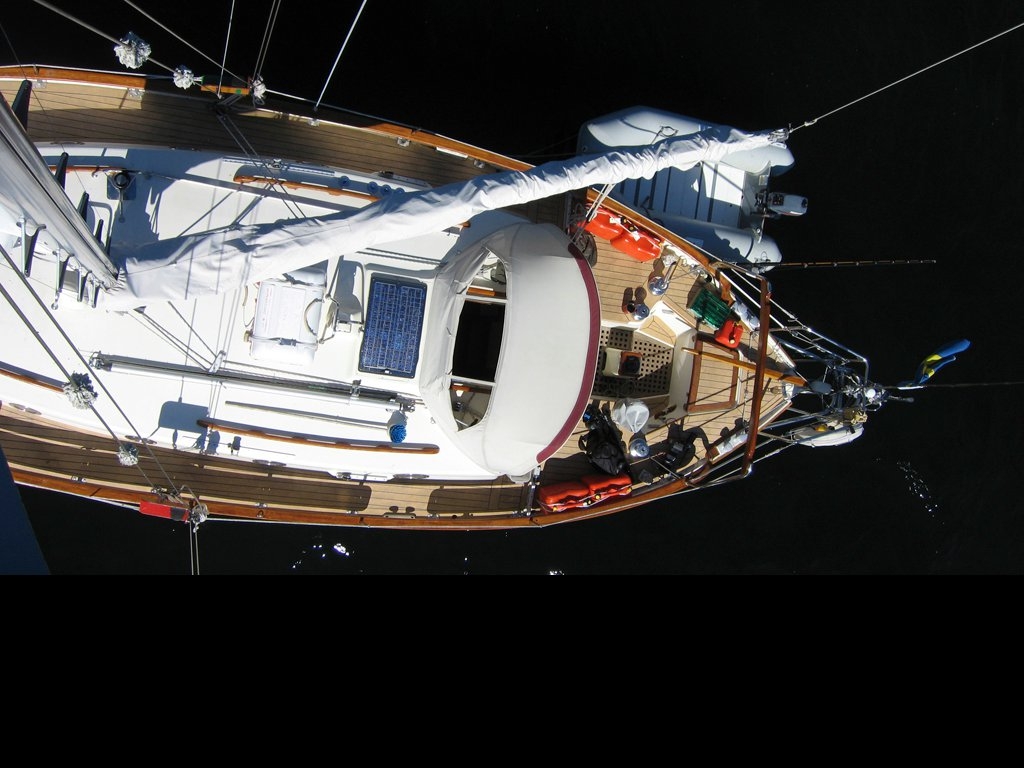 C-A 33, L-18, photographer Pär Domeij
Teemu Knopp and Lotta Hokkanen, C A -33, L-11, S/y Maria, Atlantic crossing
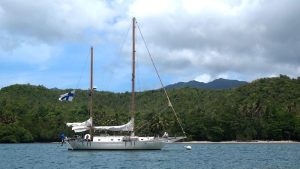
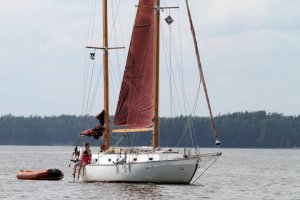
- C-A 33 L-11, photographer Teemu Knopp
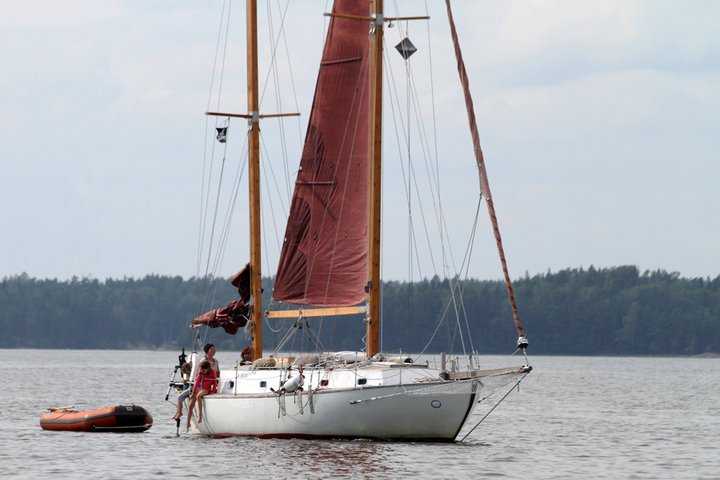
Thank you for your interest of Colin Archer 33 boats
More photographs of these racing yachts
Tero Glans refurbishing an old 3/4 Ton World Cup yacht, S/y Suomenlahden ykkönen
I will attach a few more pictures found on the internet from the archives of Tero Glans ( Todays skipper, who renovated S/y Suomen Lahden Ykkönen) and Christian Bergenheim. (The designer of SLY).
The Finnish contenders and a few new building projects in the press.
And a few photos of the building of Suomenlahden Ykkönen:
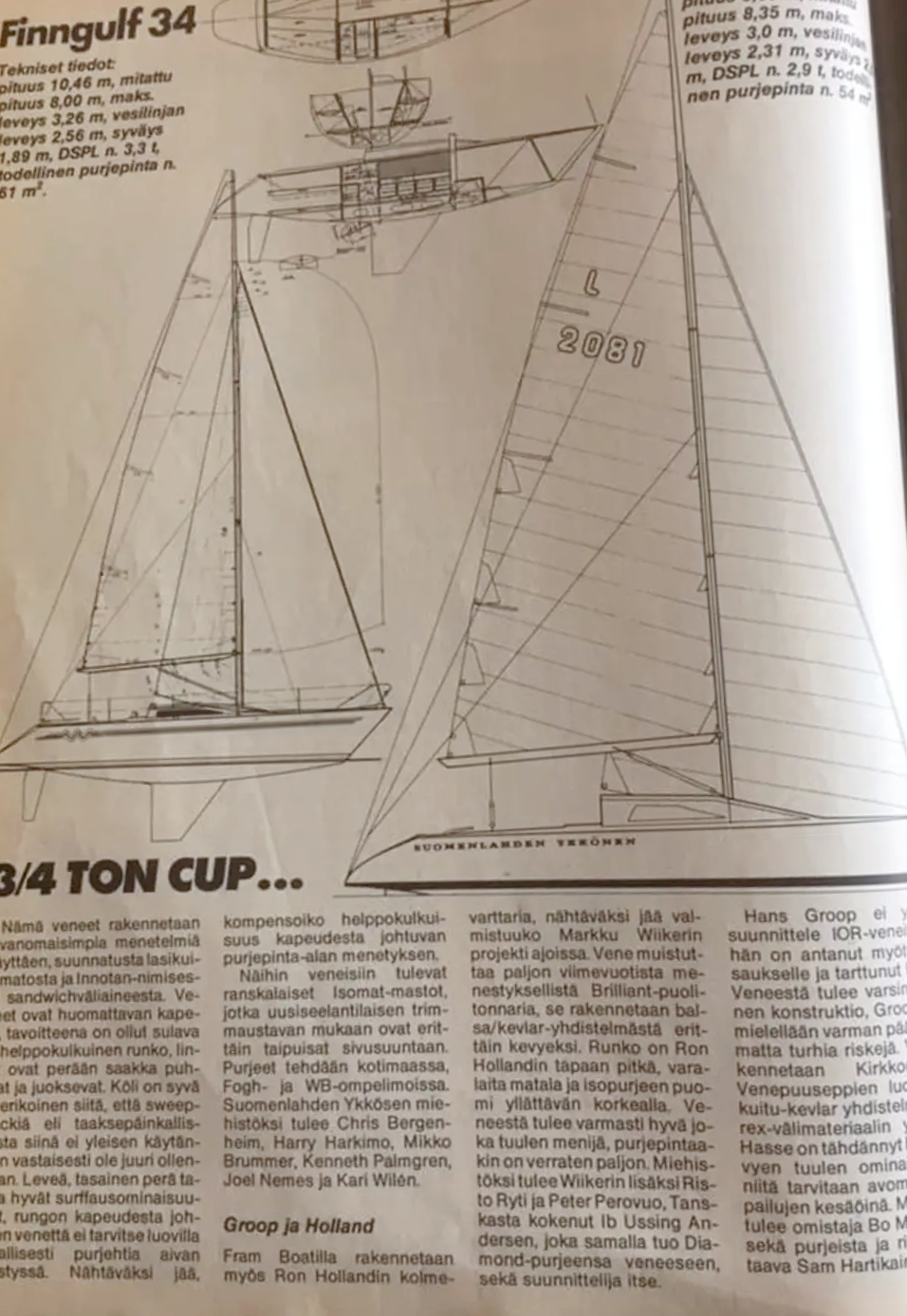

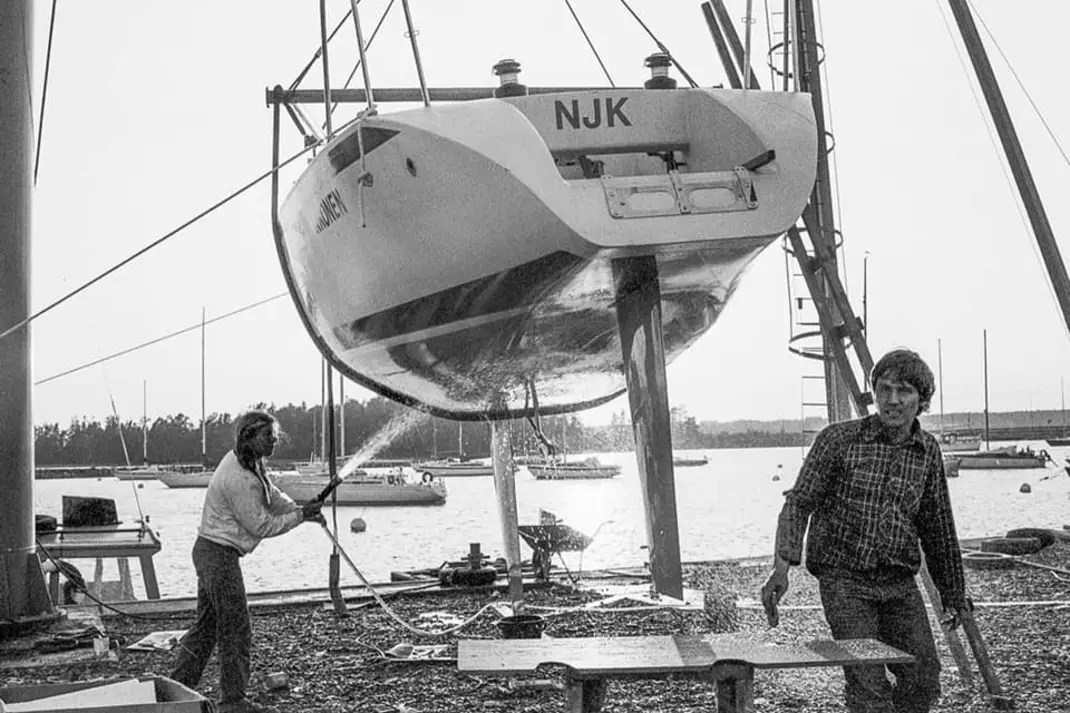
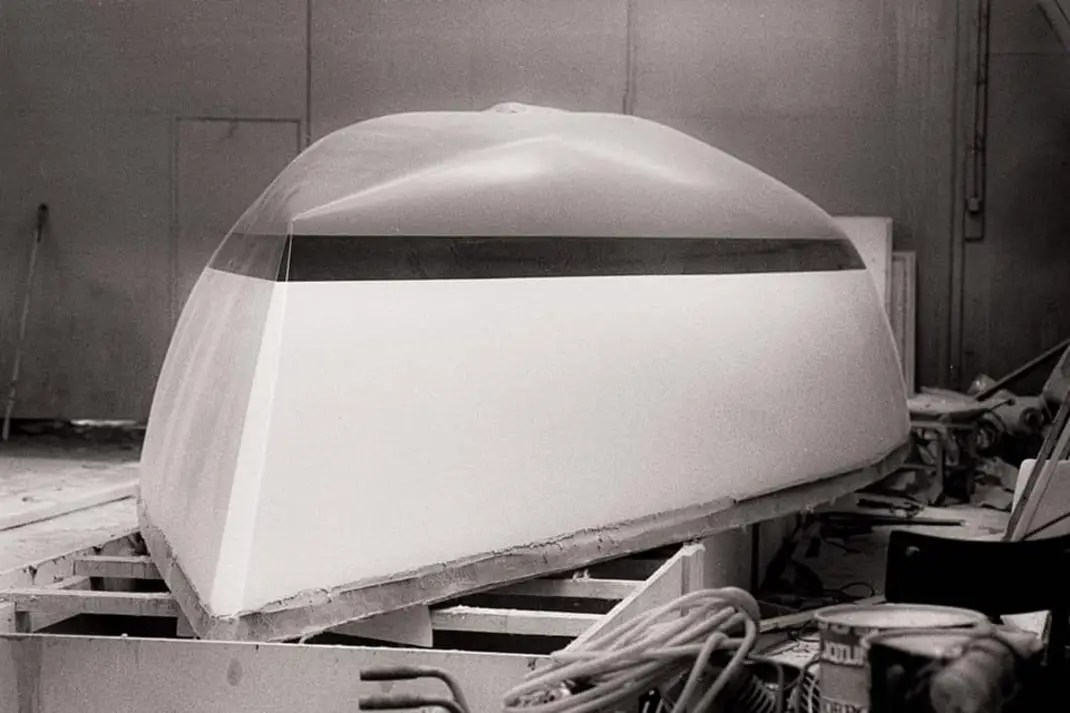
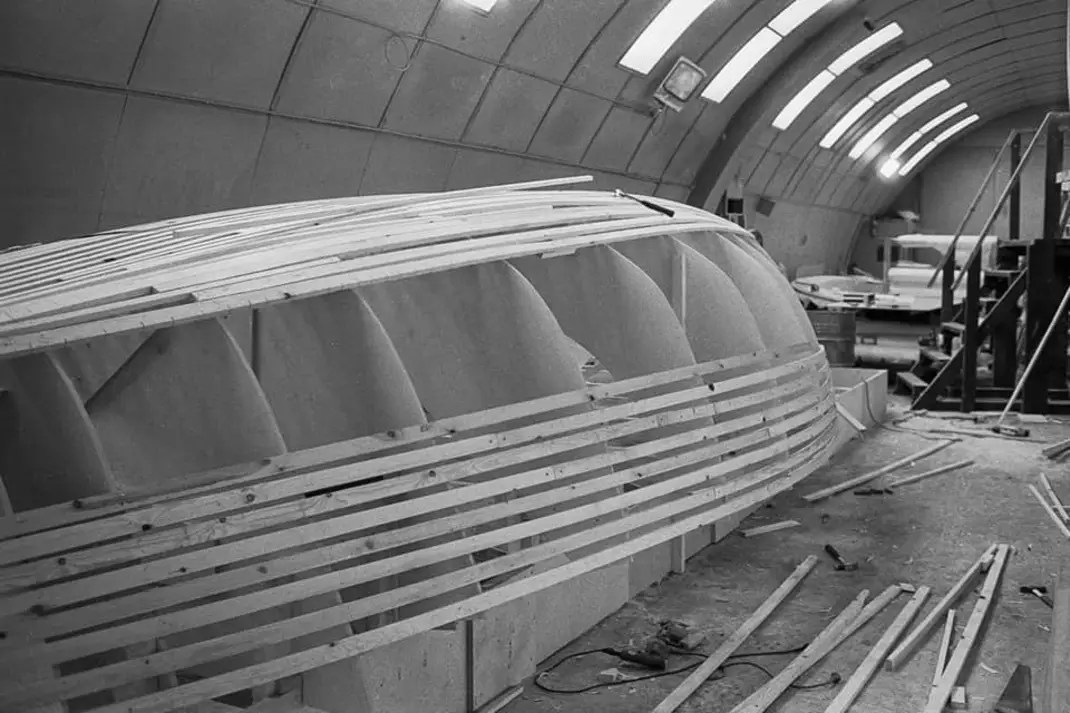
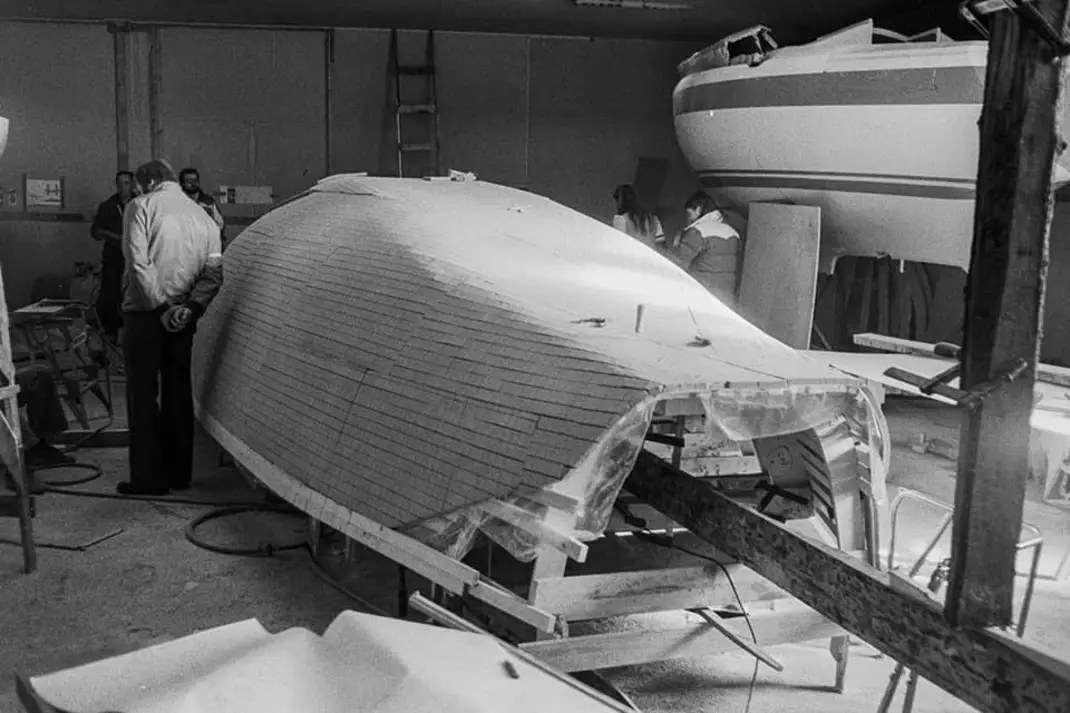
Today 2023 after quite many years Suomenlahden Ykkönen is now completely renovated by Tero Glans and she is racing again this summer. I try to attach a photo or two here of S/y Suomenlahden ykkönen and the new skipper, Tero Glans.
This racing yacht was one of our racing boats for the 3/4 Ton World Championships in Helsinki 1981
Jukka Pohjola

 Photo J Pohjola